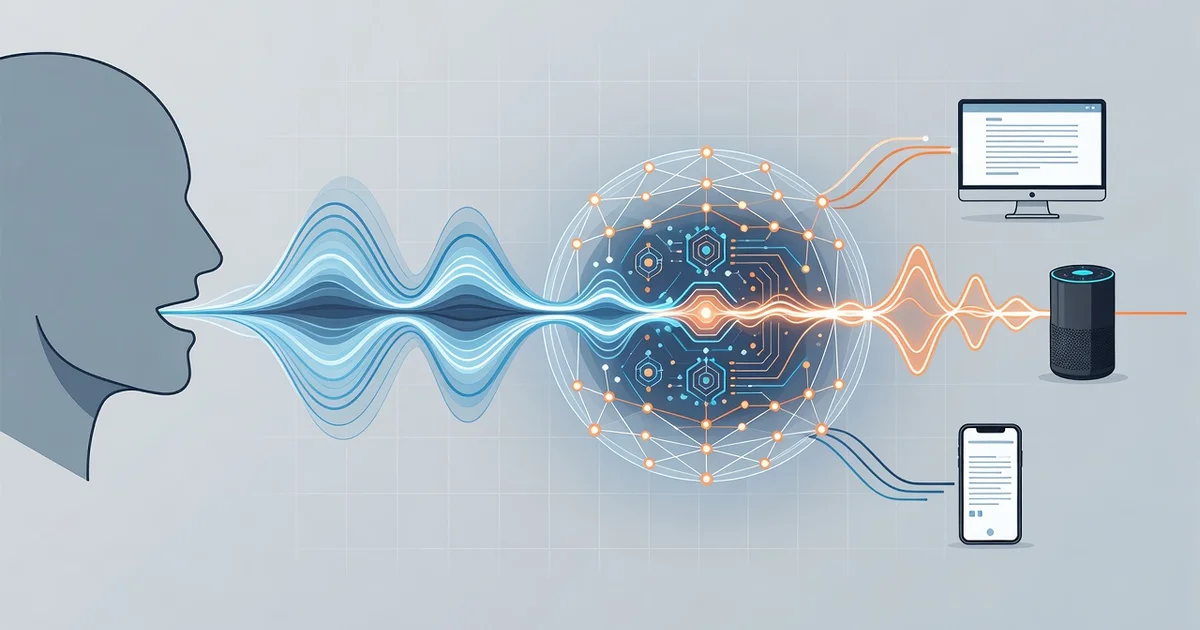
Speech recognition has quietly become part of everyday life, from voice assistants on your phone to automatic captions on video calls. What makes this technology so accurate and responsive today is the growing role of AI in modern speech recognition.
In this article, we’ll break down how AI powers speech recognition, why it outperforms older systems, and what it means for you. You’ll get clear, practical insights you can apply whether you’re a curious user or evaluating tools for work.
Introduction
Speech recognition technology has moved from the realm of science fiction into everyday life. When you ask a smart speaker to play a song, dictate a text message, or navigate a customer service phone menu, you are relying on AI-powered speech recognition. This article explores the role of AI in modern speech recognition technology with clear, practical guidance. Understanding how these systems work helps you evaluate tools, set realistic expectations, and make better decisions whether you are a consumer, a business professional, or a developer.
The journey of speech recognition began with simple pattern-matching systems in the 1950s and 1960s. Those early systems could recognize only a handful of words and required the speaker to pause between each one. Progress was slow for decades. The real revolution arrived when artificial intelligence, especially deep learning, began powering speech recognition. Today, AI enables systems to understand natural, conversational speech with impressive accuracy, even in noisy environments or with diverse accents.
This shift matters because speech is one of the most natural ways humans communicate. Removing the friction between spoken words and digital action unlocks new possibilities for accessibility, productivity, and human-computer interaction. AI is the engine making that possible.
Key Concepts
To understand AI’s role in speech recognition, you need a working knowledge of a few core ideas. These concepts form the foundation of how modern systems convert sound into text and meaning.
Acoustic Modeling
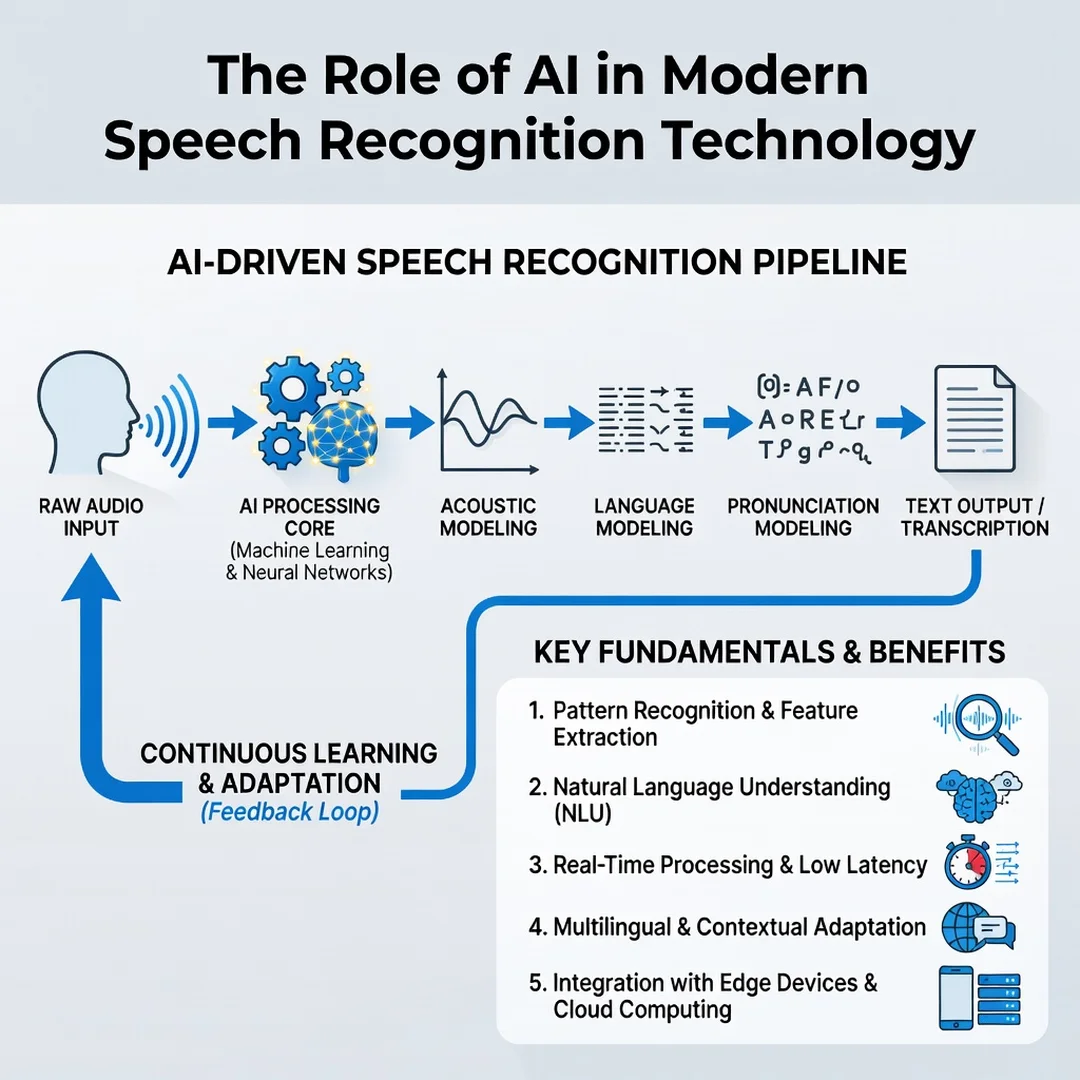
Acoustic modeling is the process of mapping audio signals to phonemes, the basic units of sound in a language. Traditional systems used hidden Markov models (HMMs) combined with Gaussian mixture models (GMMs). These statistical methods worked but struggled with variability in speech. Modern AI replaces them with deep neural networks, such as recurrent neural networks (RNNs) and convolutional neural networks (CNNs). These networks learn complex patterns from massive datasets of recorded speech, making them far more robust to different voices, speaking rates, and background noise.
Language Modeling
Recognizing sounds is not enough. The system must also predict which word sequences are likely. Language models assign probabilities to sequences of words. Early language models were based on n-grams, counting how often word combinations appeared in a text corpus. Today, AI-driven language models, including transformer-based architectures, capture long-range context and nuances. They help the system choose “recognize speech” over “wreck a nice beach” by considering the surrounding words.
End-to-End Neural Networks
A major trend in modern speech recognition is the end-to-end approach. Instead of separate acoustic, pronunciation, and language models, a single deep neural network takes audio input and outputs text directly. Popular architectures include Connectionist Temporal Classification (CTC), attention-based encoder-decoder models, and RNN-Transducer (RNN-T). End-to-end models simplify the pipeline and often achieve higher accuracy, especially for large vocabulary tasks. This approach is central to AI’s growing role because it allows the system to learn directly from data with minimal manual engineering.
Natural Language Processing (NLP)
Once speech is converted to text, NLP takes over to extract meaning. NLP helps with tasks like intent recognition, entity extraction, and sentiment analysis. In a voice assistant, NLP determines whether you are asking for weather, setting a reminder, or issuing a command. The integration of speech recognition with NLP creates a seamless voice interface.
Understanding these fundamentals helps you make informed decisions about which speech recognition tools to use or build. It also clarifies why performance varies across languages, accents, and domains.
Deep Dive
The role of AI in speech recognition goes beyond raw accuracy. It reshapes how systems are trained, deployed, and improved over time. Let’s explore several dimensions in detail.
From Rule-Based to Data-Driven
Early speech recognizers relied on hand-crafted rules and expert knowledge. Engineers painstakingly defined phonetic rules and acoustic templates. This approach was brittle and did not scale. AI flipped the paradigm: instead of programming rules, you feed the system large amounts of annotated audio and let it learn. The more data, the better the performance. This data-driven nature is why tech giants with vast user data, such as Google, Amazon, and Apple, have led the way in speech recognition quality.
Deep Learning Architectures
Deep learning is the workhorse of modern speech recognition. Several architectures dominate:
- Recurrent Neural Networks (RNNs): Designed for sequential data, RNNs and their variants like Long Short-Term Memory (LSTM) and Gated Recurrent Units (GRU) handle the temporal nature of speech. They remember previous inputs, which helps with context.
- Convolutional Neural Networks (CNNs): Often used on spectrograms (visual representations of audio) to extract local features. CNNs are good at detecting patterns like formants and harmonics.
- Transformers: Originally for text, transformers now excel in speech recognition. Their self-attention mechanism captures dependencies across the entire audio sequence, leading to state-of-the-art results. Models like Wav2Vec 2.0 and Whisper are transformer-based.
- Hybrid Models: Many production systems combine CNNs for feature extraction with RNNs or transformers for sequence modeling. This hybrid approach balances accuracy and computational efficiency.
Key Challenges AI Addresses
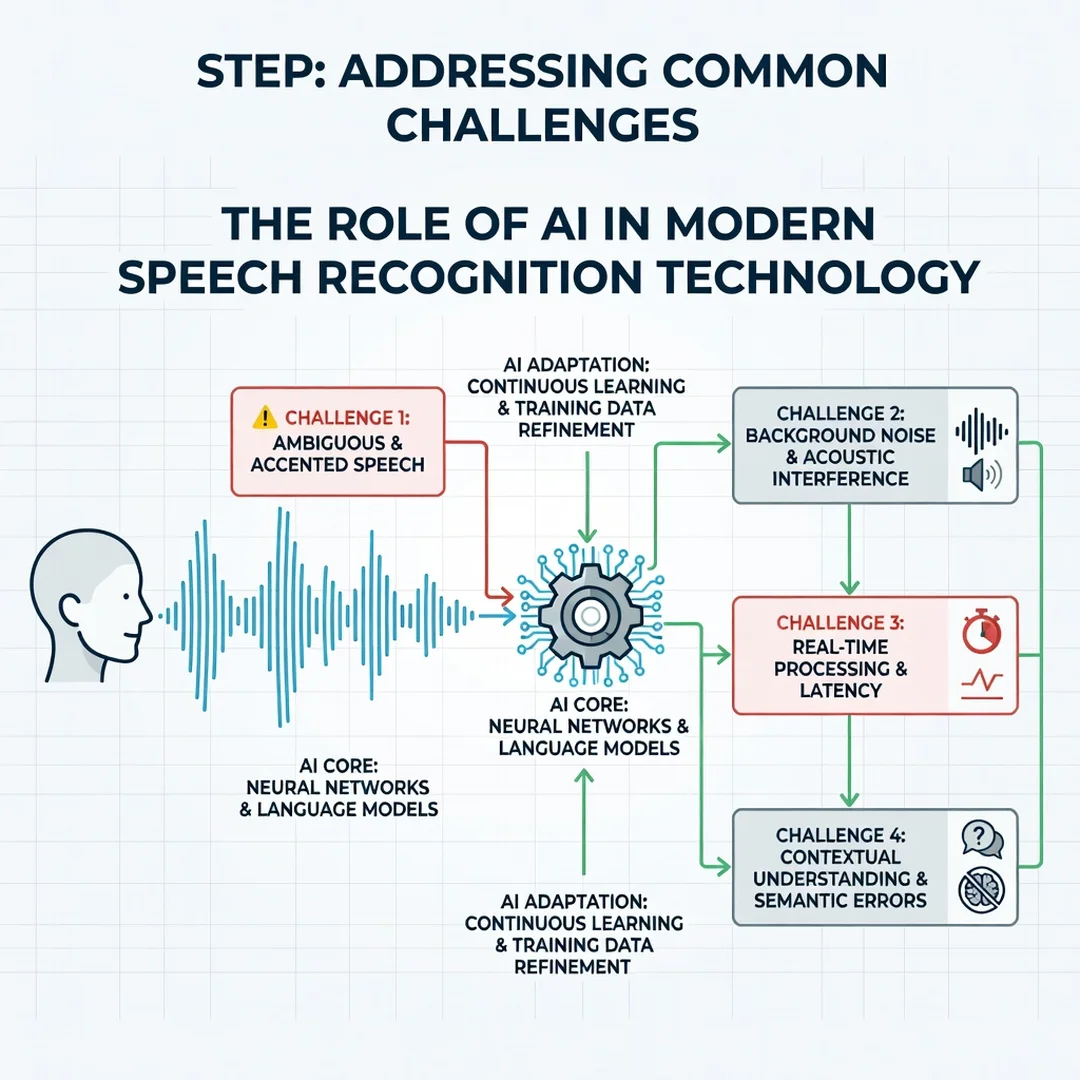
Speech recognition is difficult for many reasons. AI helps tackle several persistent challenges:
- Noise and reverberation: Real-world audio is messy. AI models trained with data augmentation (adding noise, changing speed) become robust to background sounds, echoes, and microphone quality variations.
- Accents and dialects: Deep learning models can generalize across diverse speech patterns when trained on representative data. However, bias remains an issue if training data lacks diversity.
- Homophones and context: Words that sound alike require context to disambiguate. Language models powered by AI use surrounding words to choose correctly.
- Spontaneous speech: Filler words, false starts, and casual pronunciation challenge systems. End-to-end models handle these better than traditional pipelines.
Real-World Applications
AI-driven speech recognition powers a wide range of applications. Voice assistants like Siri, Alexa, and Google Assistant rely on it. Transcription services for meetings, interviews, and medical notes use it to save time. Accessibility tools provide real-time captions for deaf and hard-of-hearing users. Customer service chatbots and interactive voice response (IVR) systems use it to route calls and answer questions. In healthcare, AI speech recognition helps doctors dictate patient notes, reducing administrative burden. In education, it supports language learning and pronunciation feedback.
Each application has unique requirements. A medical transcription system needs high accuracy for specialized terminology. A voice assistant needs low latency for real-time interaction. Understanding these trade-offs is part of making informed decisions.
Best Practices
Whether you are selecting a speech recognition tool, integrating it into a product, or simply using it daily, following best practices improves results. Reliable information and consistent habits lead to better long-term outcomes.
Step 1: Understand the fundamentals
Before diving into tools, grasp how AI speech recognition works at a high level. Know the difference between acoustic and language modeling, and understand that accuracy depends on data, model architecture, and domain. This knowledge helps you ask the right questions when evaluating vendors or building your own system. For example, if you need to recognize medical terms, you should ask whether the model was fine-tuned on clinical speech.
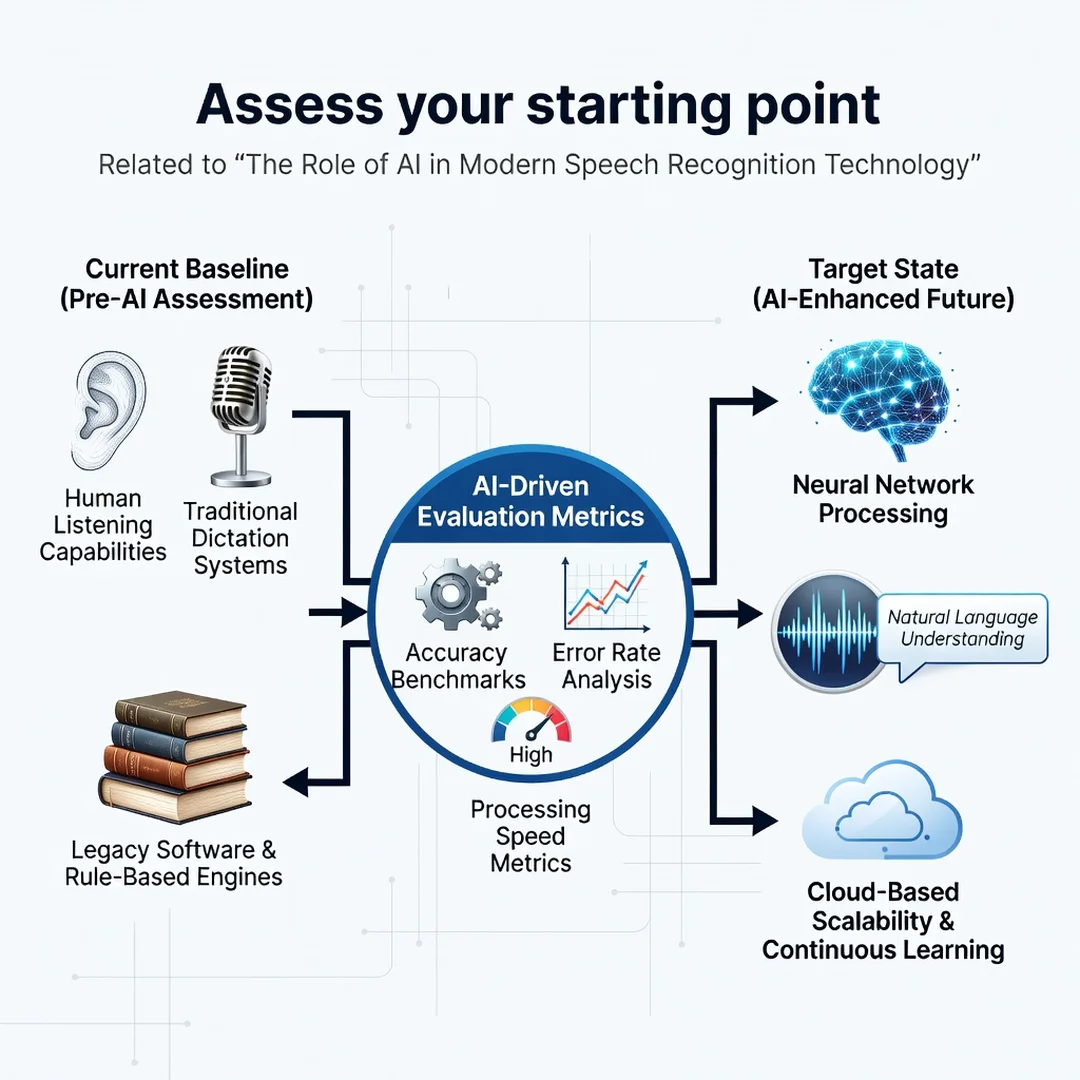
Step 2: Assess your starting point
Evaluate your current needs and constraints. What language(s) do you need? What is the audio quality? Is it real-time or batch processing? What is your budget? Are there privacy or compliance requirements (e.g., HIPAA, GDPR)? Knowing your starting point prevents wasted effort. If you are a small business, a cloud-based API might be sufficient. If you are a large enterprise with sensitive data, an on-premises solution may be necessary.
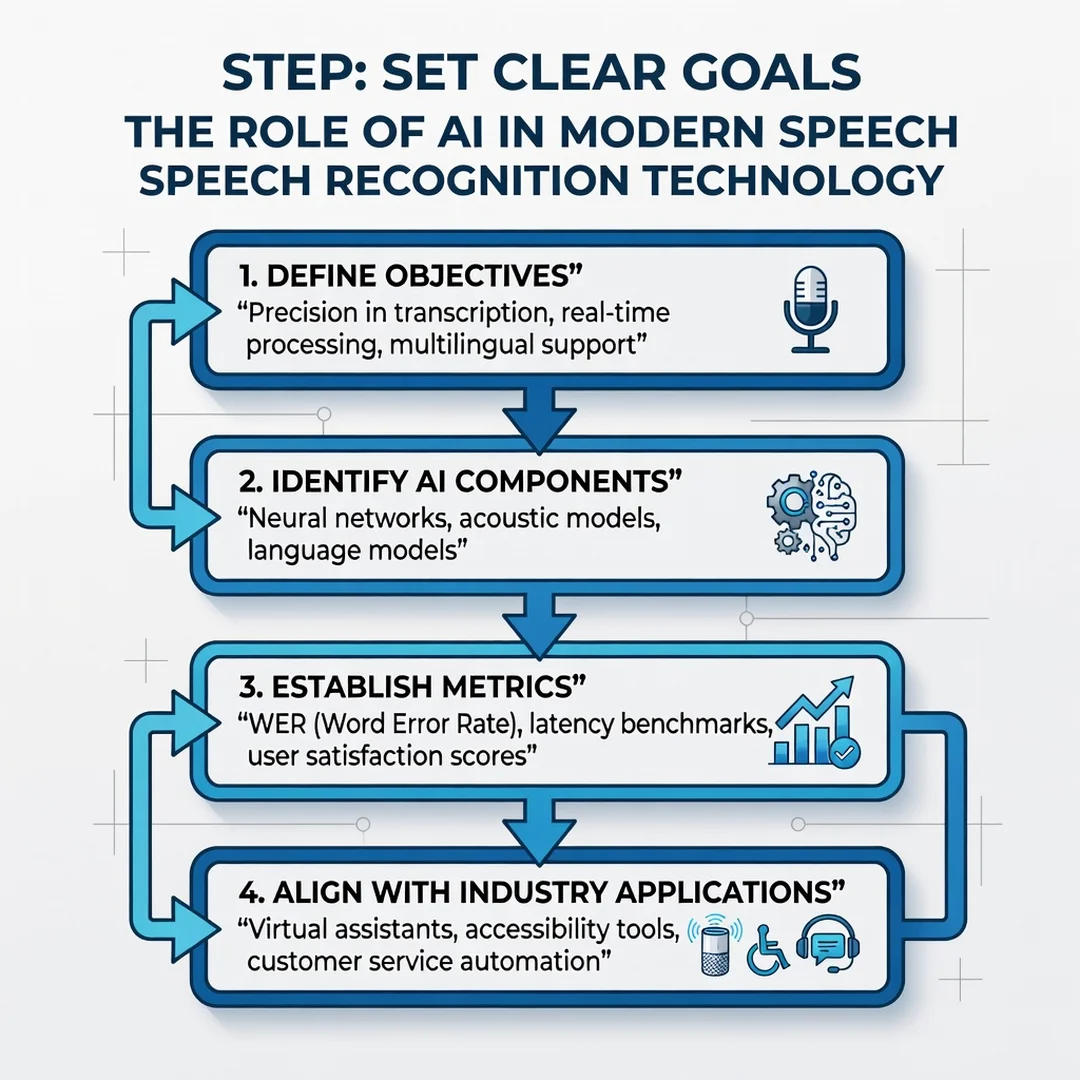
Step 3: Set clear goals
Define what success looks like. Is it 95% word accuracy? Is it reducing transcription time by half? Is it enabling hands-free operation? Clear goals guide your choices. For instance, if your goal is to transcribe noisy call center audio, you need a system with strong noise robustness. If your goal is to build a voice-controlled app, you need low-latency streaming recognition. Write down measurable targets and revisit them regularly.
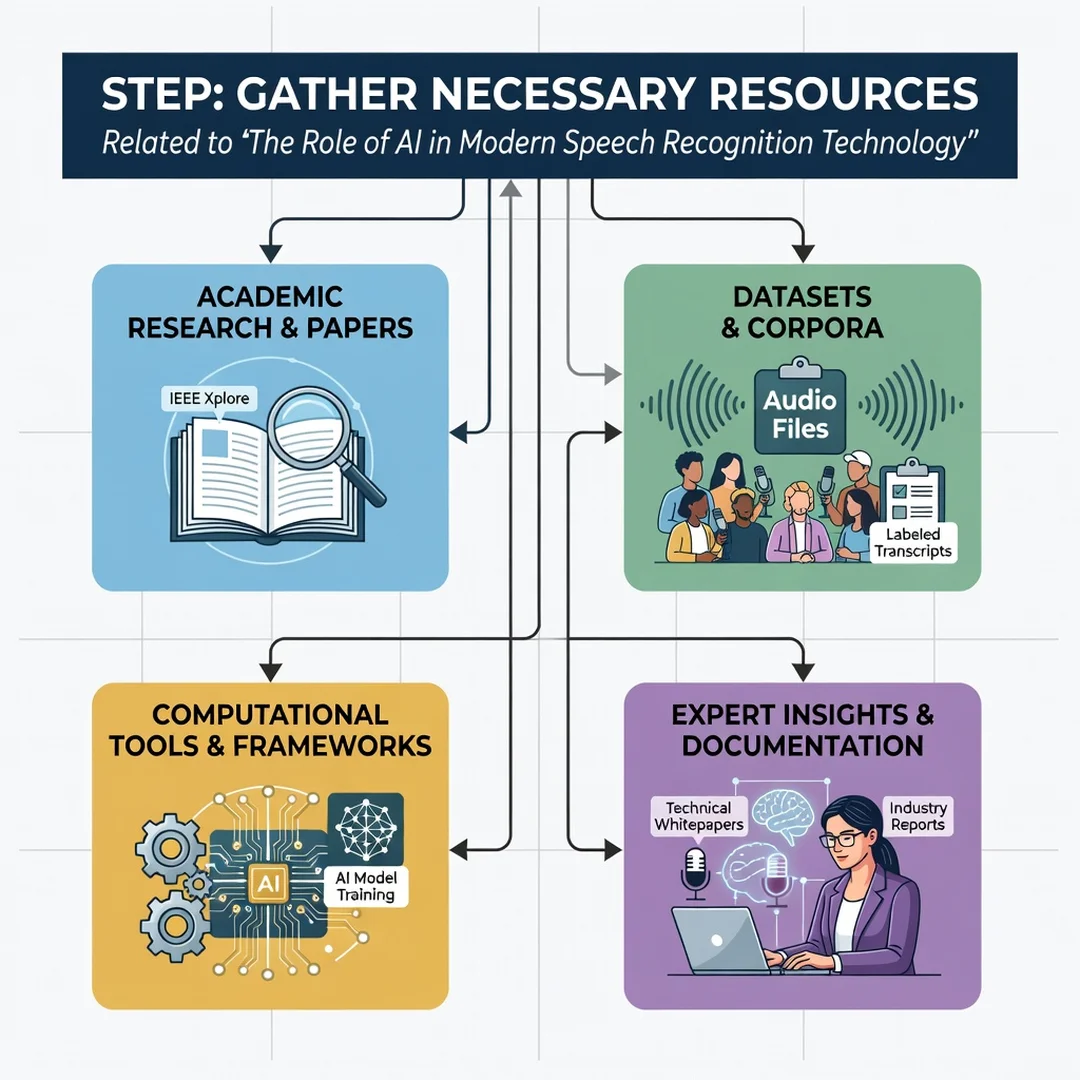
Step 4: Gather necessary resources
Identify the resources you need. This includes audio data for testing or training, computational power (GPUs for training, CPUs for inference), and human expertise (data scientists, linguists, domain experts). If you are using a pre-built service, gather API keys, documentation, and sample code. If you are building custom models, you will need annotated datasets. Open-source tools like Kaldi, DeepSpeech, and Whisper can lower barriers, but they still require technical skill.
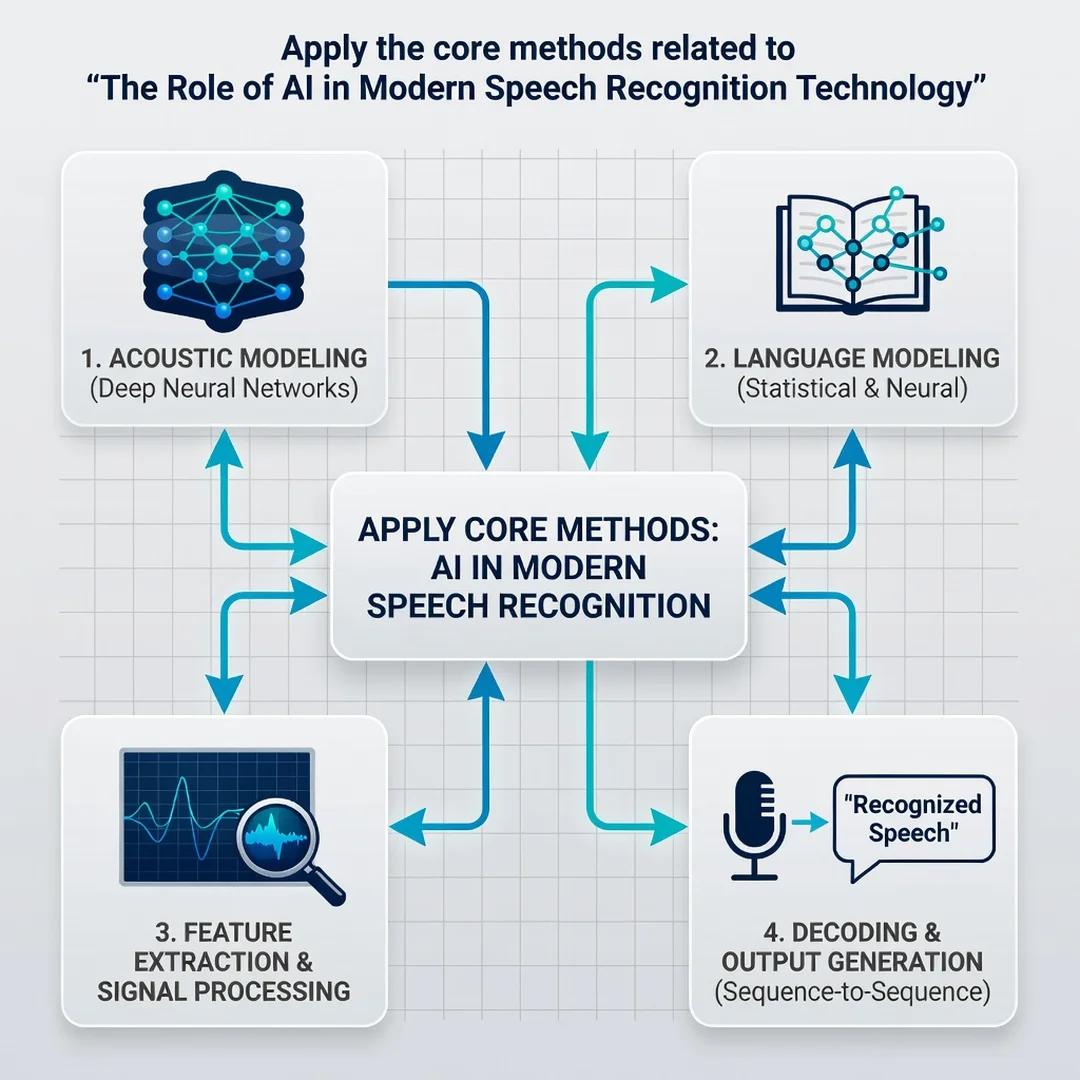
Step 5: Apply the core methods
Now put your plan into action. If you are using an existing API, integrate it into your application and test with real audio. If you are training a custom model, start with a pre-trained model and fine-tune on your domain data. Use techniques like data augmentation (adding noise, pitch shifts) to improve robustness. Implement confidence thresholds to handle uncertain transcriptions gracefully. For example, if the system is unsure, it can ask the user to repeat or flag the segment for human review.
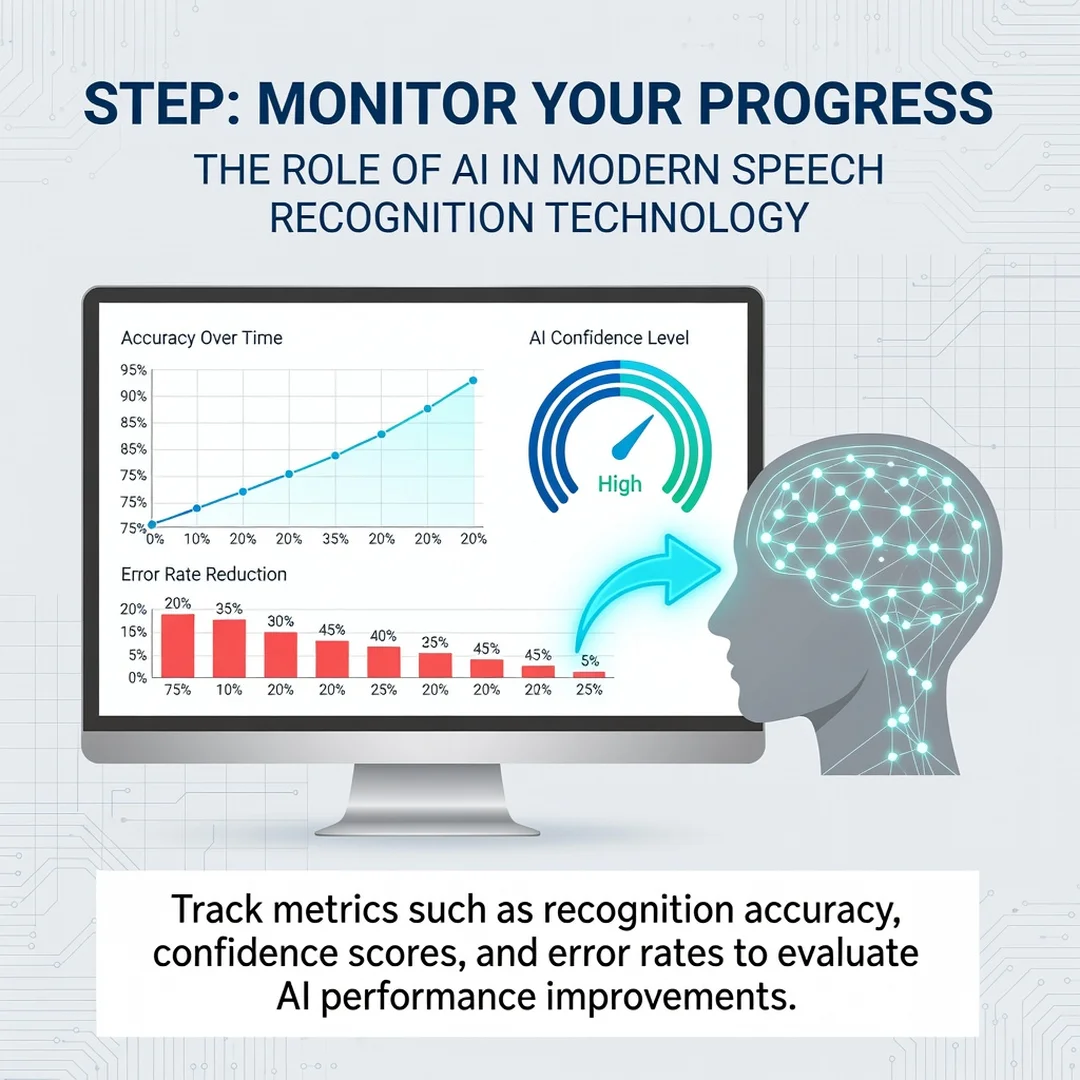
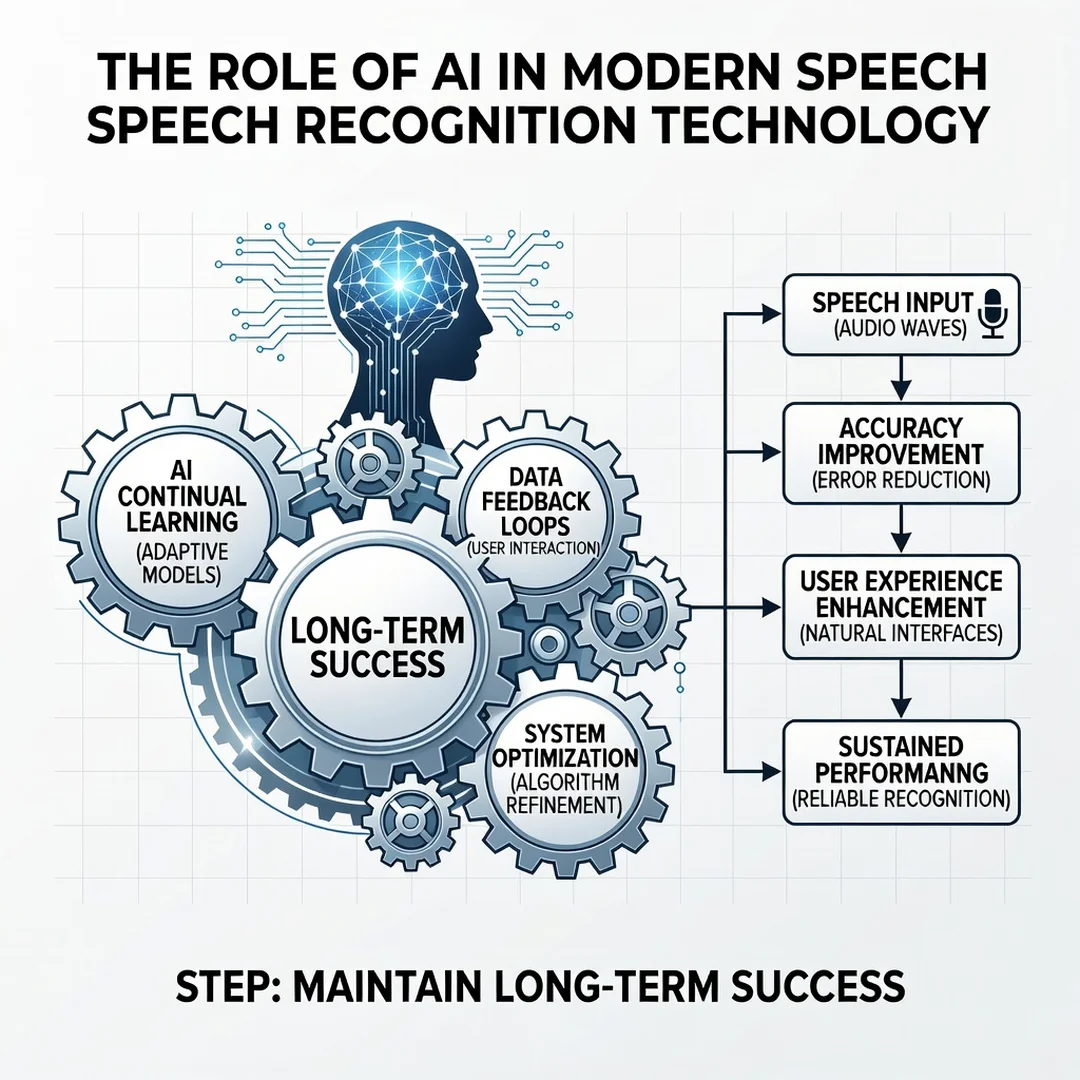
Step 6: Monitor your progress
Speech recognition is not a one-time setup. Monitor performance continuously. Track metrics like word error rate (WER), latency, and user satisfaction. Collect feedback and retrain or adjust as needed. New accents, vocabulary, or acoustic conditions can degrade accuracy over time. Set up logging to capture failures and analyze patterns. Regular monitoring ensures your system stays reliable and improves with use.
Beyond these steps, consider ethical best practices. Ensure transparency when using speech recognition (e.g., notify users that calls are transcribed). Protect user privacy by encrypting audio and text data. Address bias by testing with diverse speakers and correcting disparities. These practices build trust and align with legal requirements.
FAQ
What should I know about The Role of AI in Modern Speech Recognition Technology?
You should know that AI is the core enabler of modern speech recognition. It replaces hand-crafted rules with data-driven models that learn from examples. Key takeaways: deep learning architectures (RNNs, CNNs, transformers) power accuracy; end-to-end models simplify pipelines; and AI helps handle noise, accents, and context. You should also understand that performance depends on training data quality and domain relevance. Finally, recognize that AI speech recognition is not perfect—error rates vary, and human oversight may still be needed for critical tasks.
Who is this guide for?
This guide is for anyone seeking clear, actionable information about AI in speech recognition. That includes business leaders evaluating.
You now have a solid foundation for The Role of AI in Modern Speech Recognition Technology. Apply the best practices above and revisit this guide as your needs evolve.