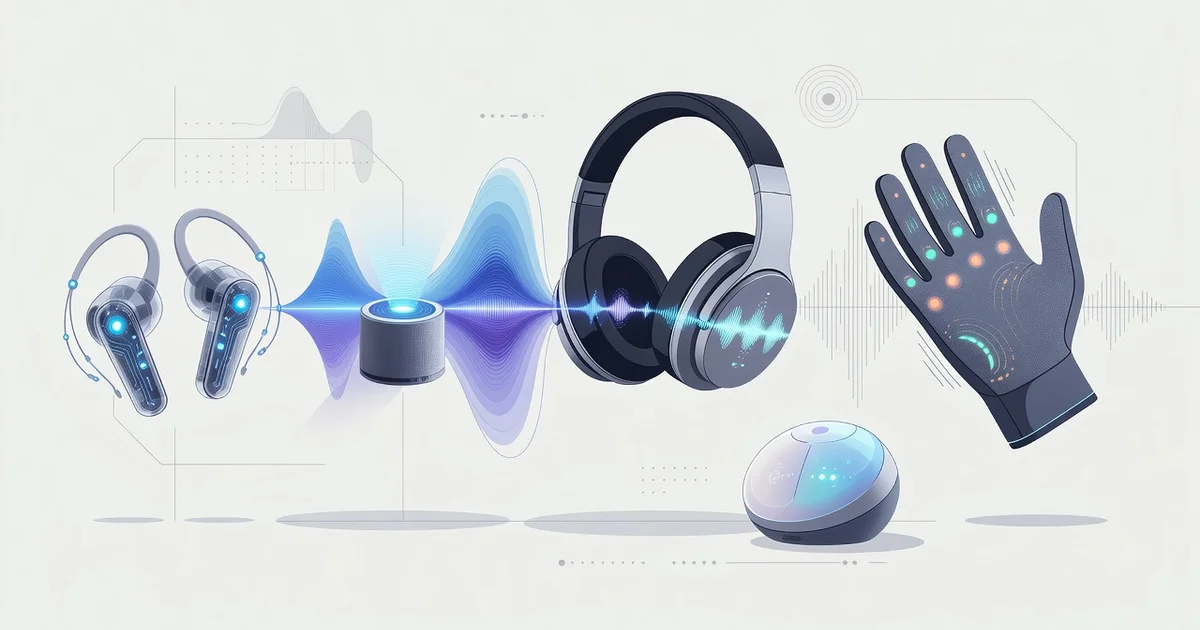
Sound is no longer just something we hear—it’s something we interact with. Emerging audio technologies are quietly reshaping how we experience music, podcasts, calls, and even our surroundings, moving far beyond basic speakers and headphones. Whether you’re a casual listener or a tech enthusiast, these advances promise richer, more personalized sound.
In this article, we’ll explore the emerging audio technologies worth watching, from spatial audio and AI-driven enhancement to lossless streaming and hearables. You’ll learn what each one does, why it matters, and how to take advantage of it today.
Introduction
Sound is one of the most intimate ways we experience the world, yet most of us treat audio technology as an afterthought. We plug in earbuds, tap play, and assume the experience is as good as it gets. That assumption is quickly becoming outdated. A wave of emerging audio technologies is reshaping how sound is captured, processed, and delivered to our ears — and the changes are practical enough to affect everyday listening, not just professional studios.
This article explores Emerging Audio Technologies That Could Transform the Way We Listen with clear, practical guidance. You do not need an engineering degree to benefit from these developments. Understanding what is changing, why it matters, and how to adopt new tools sensibly will help you get better sound from the devices you already own and make smarter choices when you upgrade. The goal here is not hype. It is a grounded look at where audio is heading and how you can prepare for it without wasting money or chasing trends that do not fit your needs.
Key Concepts
Before diving into specific products and techniques, it helps to understand the vocabulary. These terms appear repeatedly in coverage of modern audio and knowing them makes everything else easier to evaluate.
- Spatial audio: A rendering approach that places sound objects around the listener rather than simply left and right. It can simulate height and depth, making content feel more immersive without requiring a full surround-sound speaker array.
- Object-based audio: Instead of mixing sound into fixed channels, creators attach positional metadata to each sound. The playback device then decides how to map those objects to your specific speakers or headphones.
- Lossless and high-resolution streaming: Codecs that preserve more of the original recording. Lossless removes compression artifacts; high-resolution extends the frequency range and dynamic detail beyond CD quality.
- Adaptive audio: Systems that adjust output in real time based on your environment, the device, or your hearing profile. Noise cancellation that scales with ambient sound is a common example.
- Personalized audio: Hearing tests conducted through an app that generate a custom equalization curve for your ears, compensating for age-related or device-specific limitations.
- AI-driven processing: Machine learning models that separate stems, remove background noise, upmix stereo to immersive formats, or restore degraded recordings.
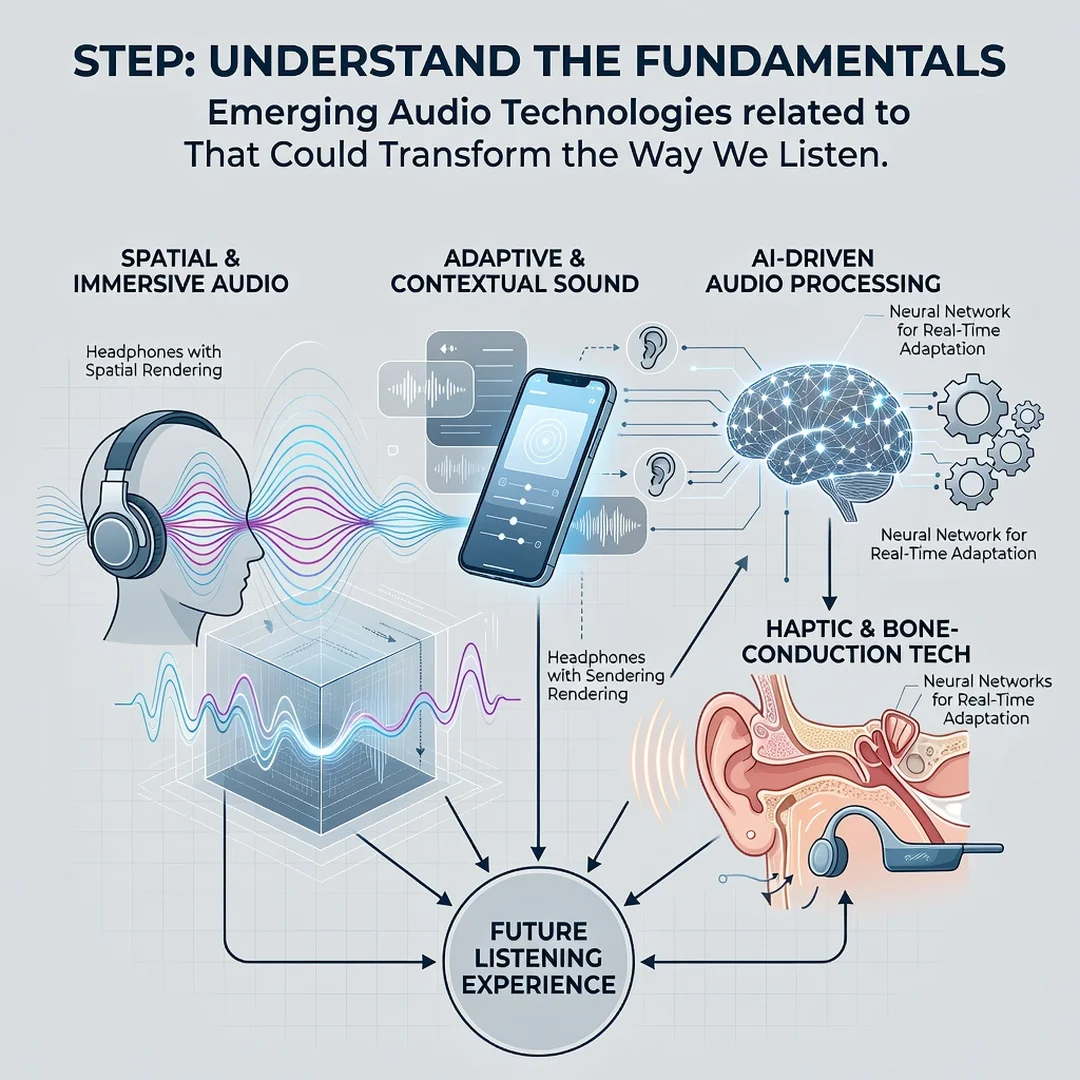
Understanding the fundamentals of Emerging Audio Technologies That Could Transform the Way We Listen helps you make informed decisions. A listener who knows the difference between spatial audio and simple stereo widening, for example, will not be fooled by marketing that uses the terms interchangeably.
Deep Dive
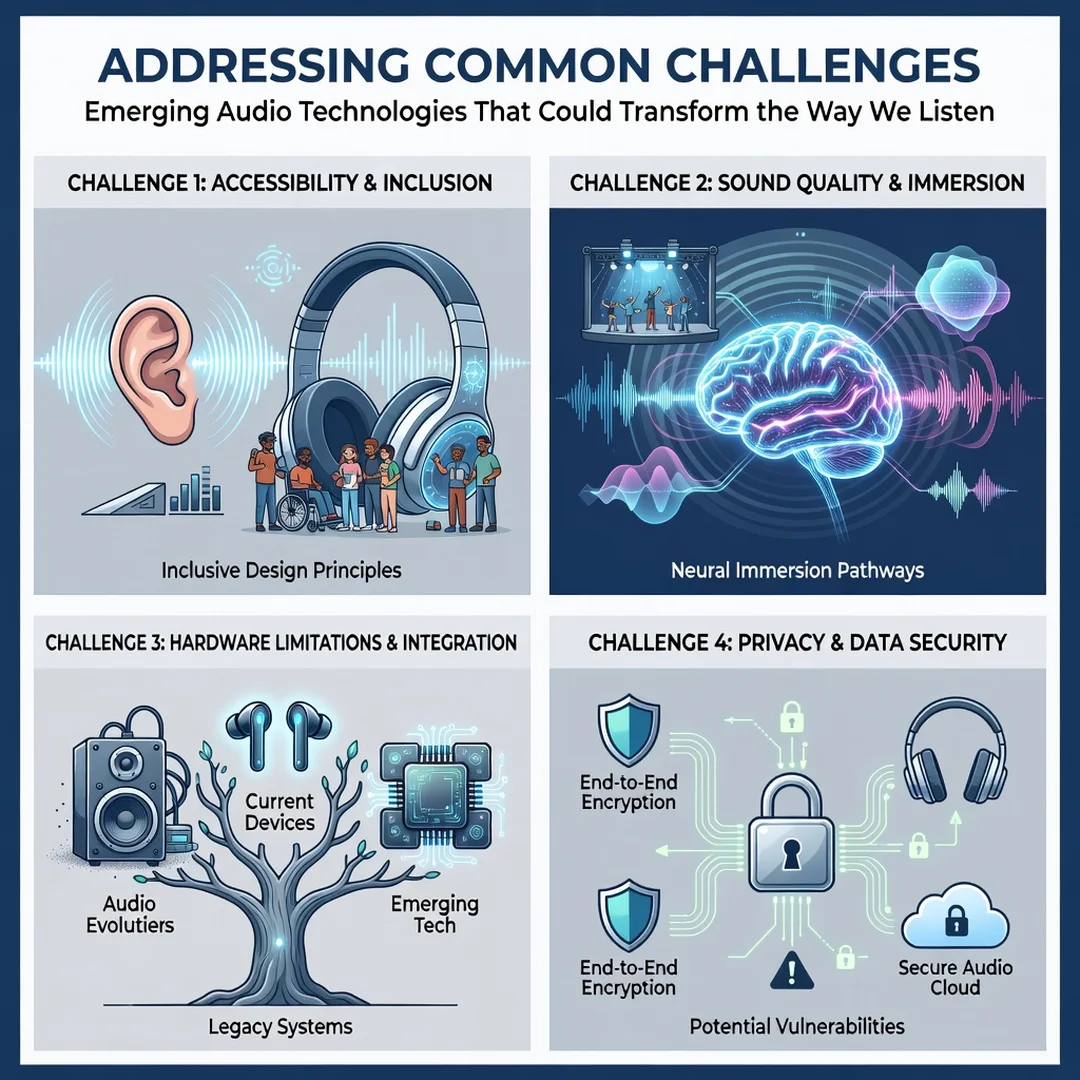
The most visible shift is the move from channel-based audio to object-based and spatial formats. Traditional surround sound assigns sounds to fixed speakers — front left, center, rear right, and so on. Object-based audio instead describes where a sound should appear in three-dimensional space and lets the playback system figure out how to create that impression. This is why a movie mixed for a cinema can sound convincing on a soundbar or a pair of earbuds. The mix carries intent, not just channel assignments.
Head-tracking is the companion technology that makes spatial audio believable on headphones. Small motion sensors detect when you turn your head and adjust the sound field accordingly, so audio appears to stay anchored in the room rather than rotating with your skull. The effect can be striking for films and games, though some listeners find it distracting for music. As with most audio technology, preference matters as much as specification.
Personalization is the second major thread. Every person’s ears are shaped differently, and hearing sensitivity declines unevenly with age. App-based hearing tests can measure your thresholds across frequencies and generate a correction curve. When that profile is applied to your headphones, details that were previously masked often become audible. For listeners with mild hearing loss — a large and growing group — this is arguably the most meaningful advance in the entire field.
AI processing rounds out the picture. Source separation models can now isolate vocals, drums, and instruments from a finished stereo track with surprising accuracy. Noise reduction that once required expensive hardware is available in software. Restoration tools can repair crackle and bandwidth limitations in historical recordings. These capabilities are moving from professional suites into consumer apps, which means the average listener has more control over sound than ever before.
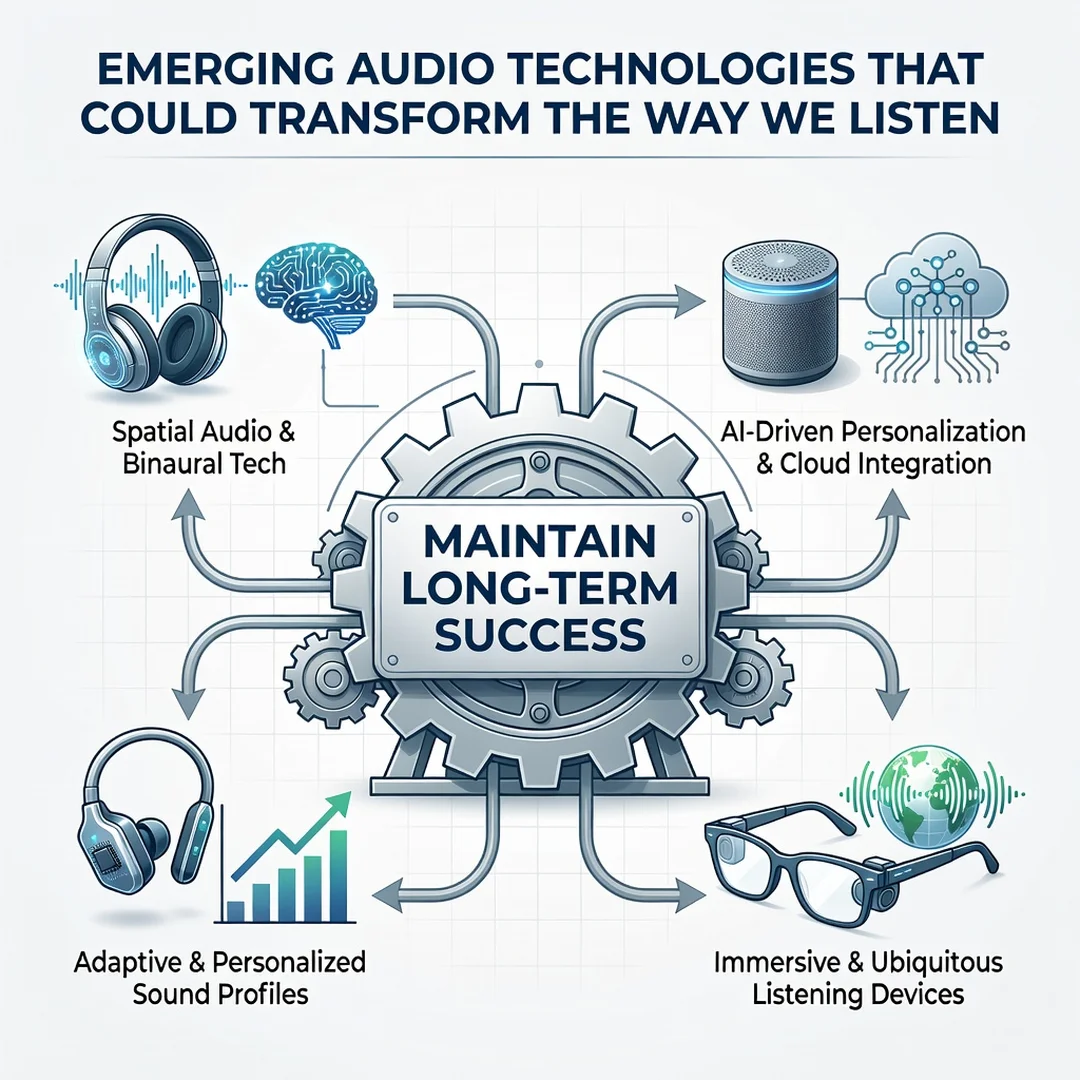
The practical upshot is that better listening no longer depends solely on buying better hardware. A well-configured phone with a good pair of headphones and the right settings can outperform a neglected high-end system. Reliable information and consistent habits lead to better long-term outcomes — and in audio, habits include things as simple as checking that spatial audio is enabled only when it suits the content.
Best Practices
Adopting new audio technology works best when you follow a few principles rather than chasing every release.
- Match the format to the content. Spatial audio enhances films, games, and live recordings. For tightly mixed stereo music, it can smear the intended image. Toggle it per album or per app rather than leaving it on globally.
- Take the hearing test. If your headphones or phone offer a personalized audio profile, spend the ten minutes to complete it. The improvement is often larger than any cable or DAC upgrade.
- Prioritize source quality. Lossless streaming only helps if your headphones and connection support it. Check that your Bluetooth codec is not the bottleneck before paying extra for high-resolution tiers.
- Update firmware. Audio devices frequently receive improvements to noise cancellation, latency, and spatial rendering through firmware. Many users never update and never experience the gains.
- Test before you trust. Use familiar tracks when evaluating any new feature. If you cannot hear a clear difference on material you know well, the feature is not adding value for you.
- Protect your hearing. No technology compensates for sustained loud listening. Keep volumes moderate and take breaks in noisy environments.
Step 1: Understand the fundamentals
Start by learning the core terms: spatial audio, object-based mixing, lossless codecs, adaptive processing, and personalized profiles. Read the settings menus on your current devices and identify which of these features you already have. Many people own spatial audio-capable headphones without realizing the feature is switched off or limited to certain apps. A few minutes of exploration establishes the baseline you will build on.
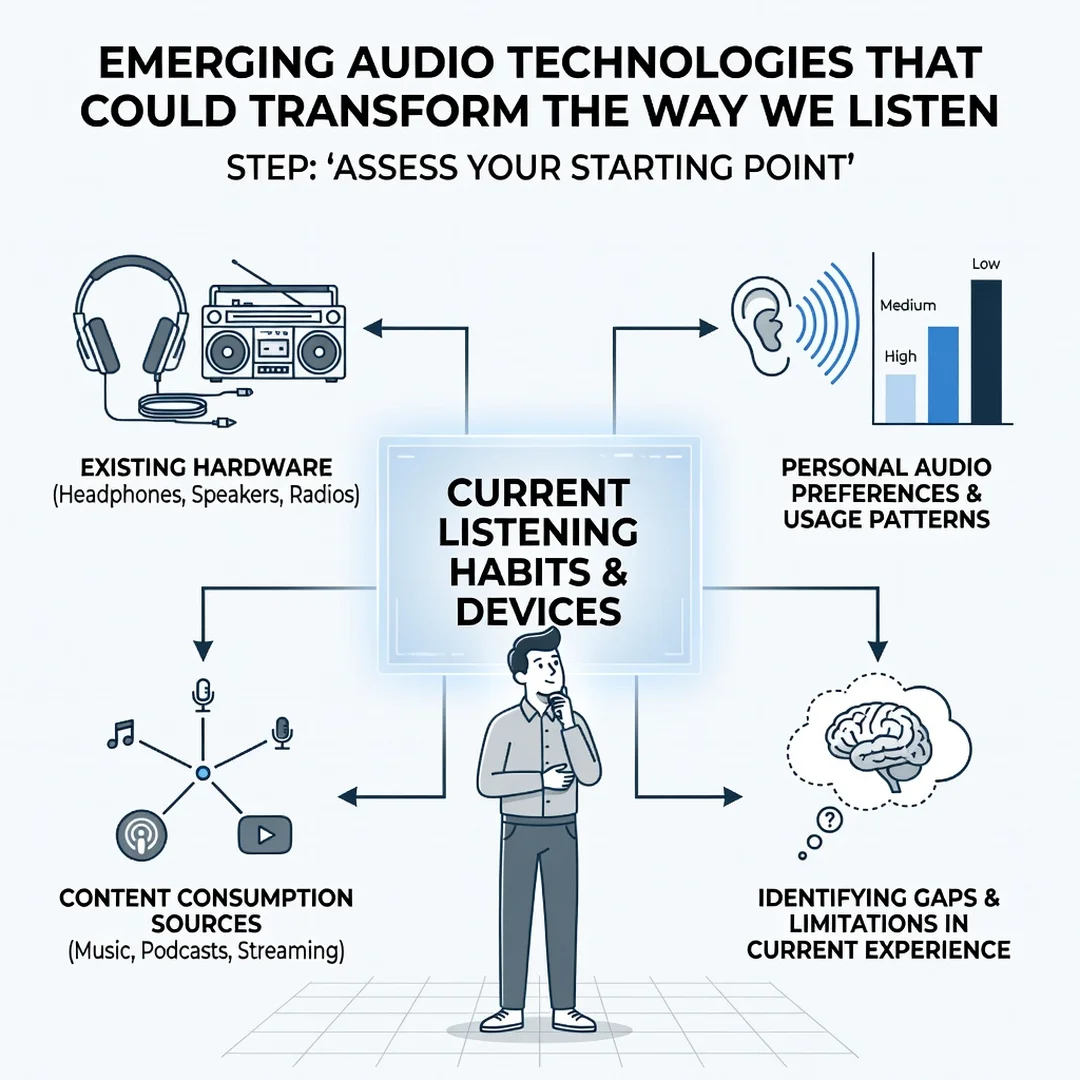
Step 2: Assess your starting point
Evaluate what you actually use. List your primary listening situations — commuting, working, watching films, gaming, or critical music listening — and note the device and headphones involved in each. Check your streaming service tier, your Bluetooth codec, and whether your phone supports the features you are curious about. This inventory prevents you from solving problems you do not have and reveals the bottlenecks that actually limit your experience.
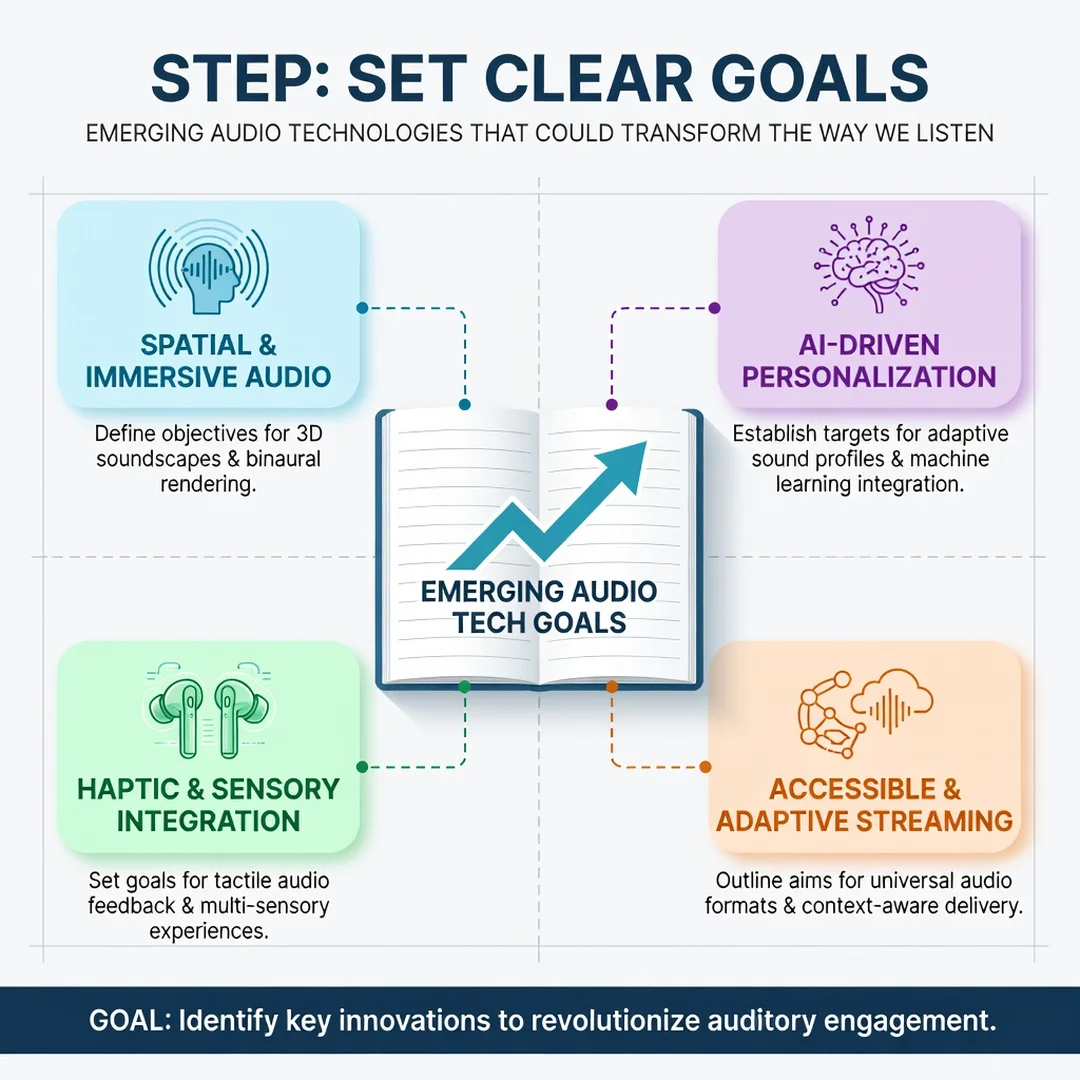
Step 3: Set clear goals
Define what better listening means for you. It might be clearer dialogue in films, less fatigue during long work sessions, more immersive gaming, or simply hearing detail in music you have loved for years. Concrete goals make it easy to judge whether a new technology earns its place. Vague desires like “better sound” lead to impulse purchases; specific goals lead to targeted improvements.
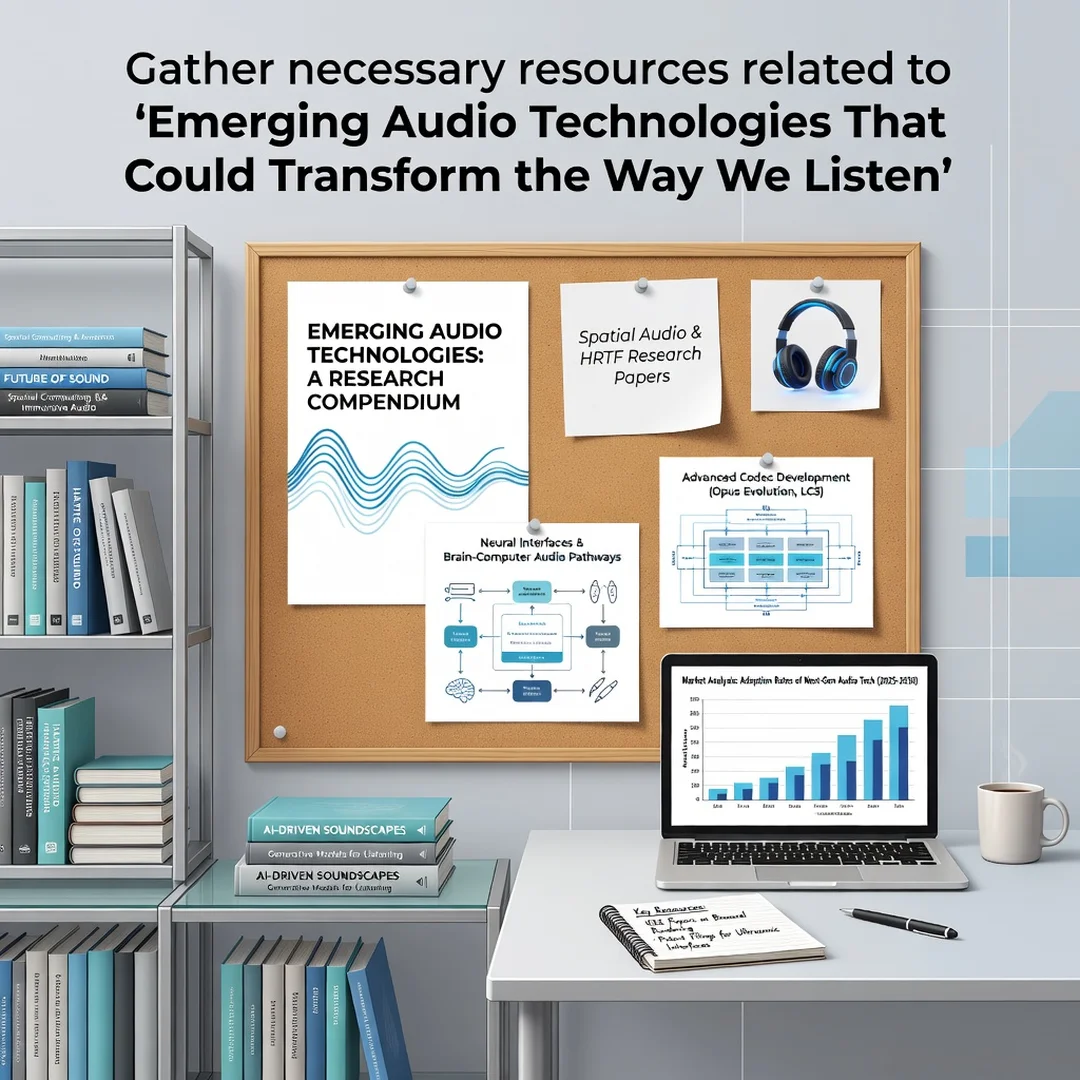
Step 4: Gather necessary resources
Collect the tools you need: a streaming service that supports the formats you want, headphones with the relevant capabilities, and the companion apps that unlock settings and firmware updates. If you are considering a hearing profile, find the official test in your device’s accessibility or audio settings. Budget matters here — decide in advance whether you are optimizing existing equipment or planning an upgrade, and stick to that decision.
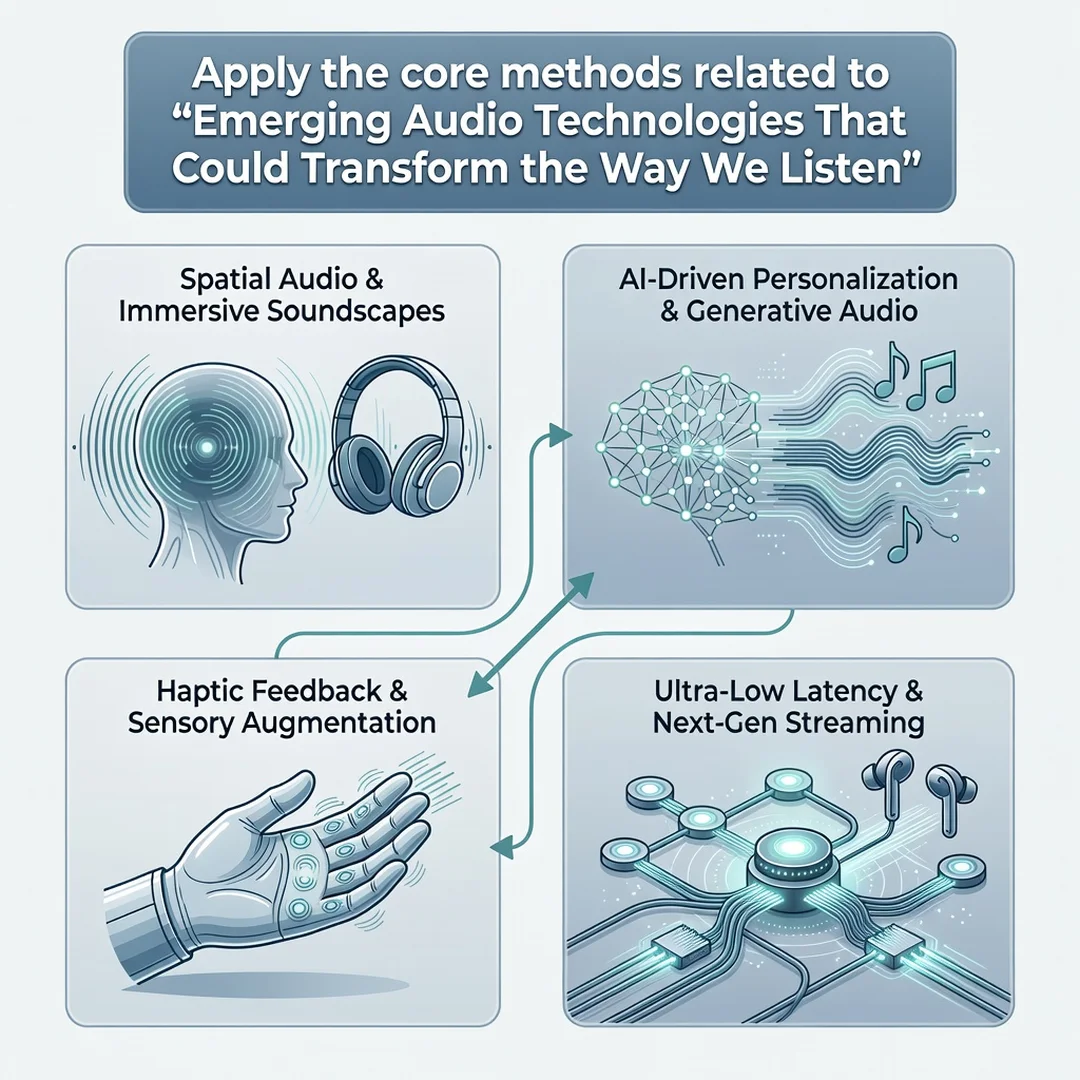
Step 5: Apply the core methods
Enable and configure one feature at a time so you can hear its effect. Start with personalization if available, since it benefits everything else. Then experiment with spatial audio on suitable content, adjust noise cancellation modes for your environments, and confirm that your streaming quality settings match your hardware. Keep notes on what you changed and how it sounded. Testing one variable at a time is the only reliable way to know what is actually working.
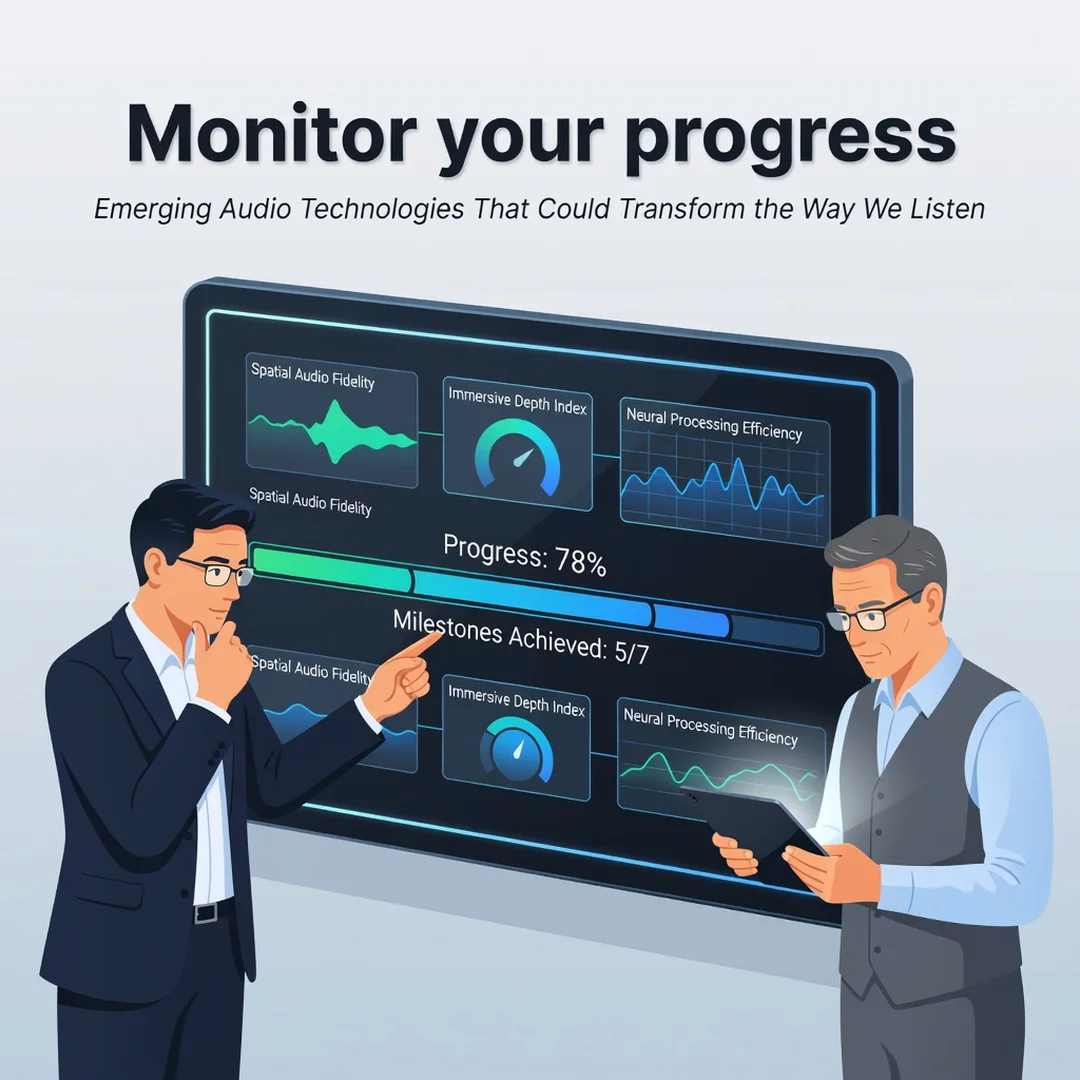
Step 6: Monitor your progress
Revisit your setup periodically. Firmware updates can change how features behave, and new formats arrive regularly. Every few months, recheck your goals against your experience and adjust. If a feature turned out to be a distraction, turn it off. If a setting proved valuable, make it your default. This simple review cycle keeps your audio setup aligned with how you actually listen.
FAQ
What should I know about Emerging Audio Technologies That Could Transform the Way We Listen?
The most important takeaway is that these technologies are already available on mainstream devices. Spatial audio, personalized hearing profiles, lossless streaming, and AI noise reduction are not experimental — they are settings you can enable today. The second thing to know is that more features do not automatically mean better sound. Each technology suits certain content and situations, and the skill lies in matching the tool to the task. Finally, understand that your ears and habits matter more than any specification. A well-configured mid-range setup used attentively will outperform premium gear that is never adjusted.
Who is this guide for?
This guide is for everyday listeners who want to get more from the audio equipment they already own and make smarter decisions about future purchases. It suits commuters, remote workers, film and game enthusiasts, and anyone curious about why their headphones sound different from one app to the next. No technical background is required. If you can navigate a settings menu and you are willing to test a few features with familiar music, you have everything you need to benefit from these emerging technologies.
Conclusion
Emerging audio technologies are quietly changing what everyday listening can be. Spatial and object-based audio reimagine where sound lives, personalization tailors output to your own ears, and AI processing cleans up and restores material that once seemed fixed. None of these advances require a studio or a specialist's budget. They require only that you understand the fundamentals, assess your actual habits, set specific goals, and.
You now have a solid foundation for Emerging Audio Technologies That Could Transform the Way We Listen. Apply the best practices above and revisit this guide as your needs evolve.