Artificial intelligence is no longer a distant concept—it is actively reshaping how we create, consume, and interact with sound. From smarter noise cancellation in your earbuds to real-time voice cloning and AI-generated music, the future of audio technology is arriving faster than most people realize.
In this article, we break down the most important ways AI is transforming audio, what it means for everyday listeners and creators, and how you can stay ahead of these changes. Whether you are a podcaster, musician, or simply curious about sound, understanding this shift will help you make smarter decisions today.
Introduction
Every time you ask a smart speaker to play a song, take a phone call with background noise removed, or listen to a podcast that sounds like it was recorded in a professional studio, artificial intelligence is working behind the scenes. AI is no longer a distant research project in audio. It is embedded in the tools people use every day, from earbuds to stadium sound systems. This article explores How AI Is Changing the Future of Audio Technology with clear, practical guidance that you can apply whether you are a casual listener, a content creator, or someone evaluating audio products for work.
The shift is not just about better sound quality. AI is changing how audio is captured, compressed, transmitted, enhanced, and even generated. It affects musicians, podcasters, call center operators, hearing aid users, and filmmakers. Understanding the fundamentals of How AI Is Changing the Future of Audio Technology helps you make informed decisions about the devices you buy, the software you use, and the skills you develop. Reliable information and consistent habits lead to better long-term outcomes, whether your goal is clearer meetings, more polished recordings, or simply enjoying music with less distraction.
Key Concepts
Before diving into specific tools and techniques, it helps to understand the core ideas that make AI audio different from traditional audio processing. These concepts appear repeatedly across almost every application, from noise cancellation to music generation.
- Machine learning models: Instead of following fixed rules, AI audio systems learn patterns from thousands of hours of audio. They can distinguish a human voice from a barking dog or a passing truck because they have been trained on examples of both.
- Neural networks for audio: Deep learning architectures, including convolutional and recurrent networks, process sound as spectrograms or raw waveforms. They can separate sources, remove reverberation, or upsample low-quality audio into high-resolution output.
- Real-time inference: Many modern applications—live captioning, call noise suppression, hearing aids—must run within milliseconds. AI models are compressed and optimized to work on small chips without sending data to the cloud.
- Generative audio: Models can now create speech, music, and sound effects from text prompts. This raises creative opportunities as well as questions about authenticity and copyright.
- Adaptive personalization: AI can tune audio to your hearing profile, your room acoustics, or your content preferences. Two people listening to the same track may hear different mixes tailored to their ears.
These concepts are not isolated. A single pair of premium earbuds may use a neural network for noise cancellation, another for voice pickup, and a third for personalized sound equalization. The common thread is data: the more high-quality audio a system processes, the better it tends to perform.
Deep Dive
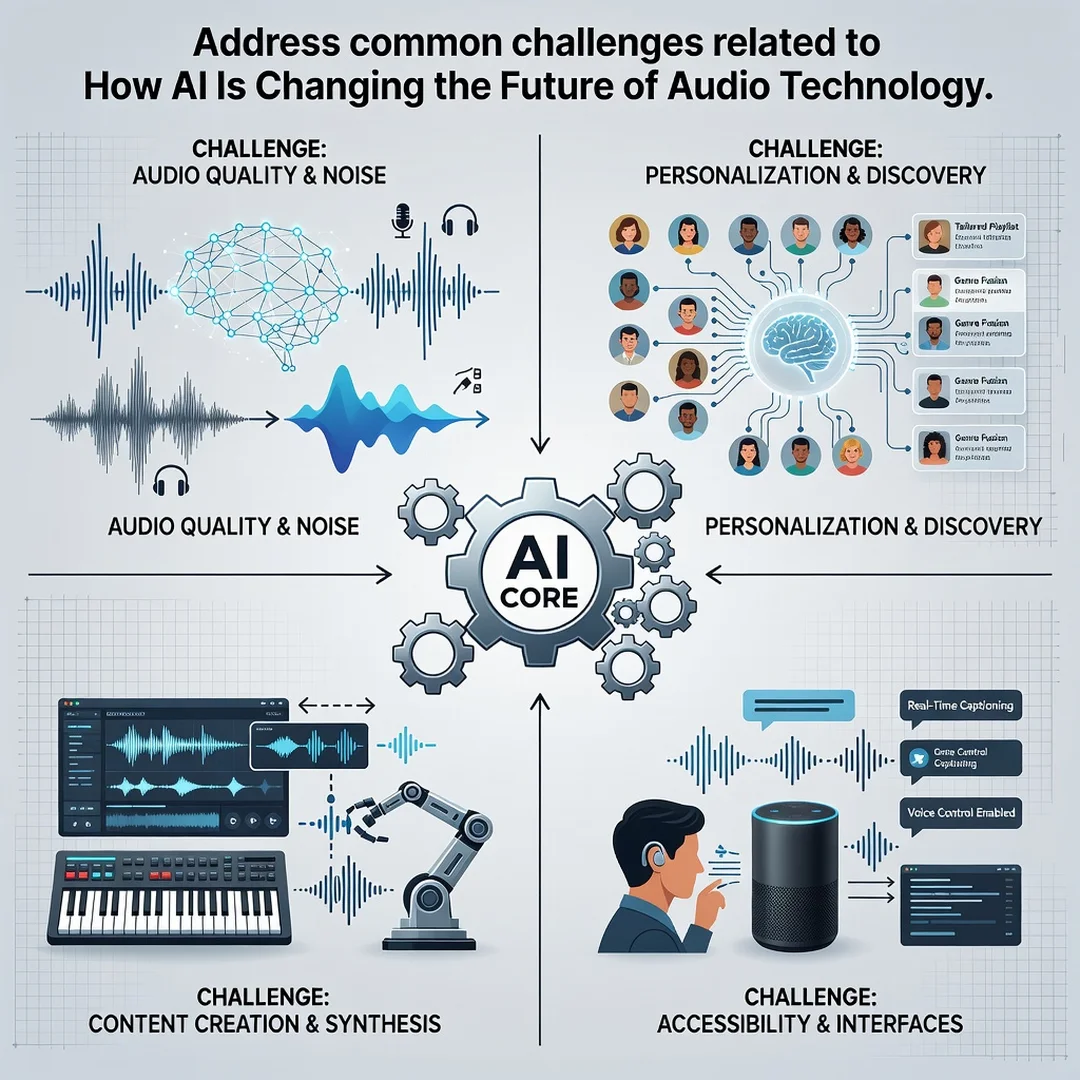
To see how AI is changing audio in practice, consider four major domains: capture, processing, distribution, and creation. Each has seen rapid change in the last few years.

Capture and enhancement
Microphones once captured whatever reached them. Today, AI can isolate a speaker from a noisy café, remove keyboard clicks during a podcast interview, and restore old recordings by predicting missing frequencies. For field reporters, vloggers, and remote workers, this means professional results without a soundproof booth. The same technology powers hearing aids that amplify speech while suppressing traffic noise, improving quality of life for millions.
Compression and streaming
Streaming services face a constant trade-off between bandwidth and fidelity. AI-based codecs can deliver better sound at lower bitrates by learning what humans are likely to notice and what can be discarded. This makes high-quality audio more accessible on slow connections and reduces storage costs for large audio libraries. For listeners, it means fewer buffering interruptions and better sound on mobile networks.
Voice interfaces and assistants
Speech recognition has improved dramatically thanks to AI. Voice assistants now understand accents, background noise, and natural phrasing far better than earlier systems. This has implications beyond convenience: voice control improves accessibility for people with mobility impairments, and real-time translation breaks down language barriers in meetings and travel.
Music and sound creation
Generative AI can compose melodies, suggest chord progressions, and create custom sound effects. It can also separate a finished song into individual stems—vocals, drums, bass, and instruments—for remixing or practice. Musicians use these tools to prototype ideas quickly, while filmmakers generate temporary soundtracks before hiring a composer. The technology does not replace human creativity; it changes the workflow and lowers the barrier to entry.
Across all four domains, the pattern is consistent: AI handles repetitive or computationally difficult tasks, freeing humans to focus on creative and strategic decisions. Understanding this division of labor is essential for anyone planning to adopt AI audio tools.
Best Practices
If you want to benefit from AI audio without wasting time or money, follow these practical guidelines.
- Start with a clear problem. Do not adopt AI because it is trendy. Identify a specific issue—background noise on calls, poor podcast audio, difficulty hearing in crowds—and look for tools that solve it.
- Test with your own audio. Demo recordings from vendors are often ideal. Use your own voice, your own room, and your own devices to evaluate performance.
- Prioritize privacy and data handling. Some AI audio tools process everything in the cloud. If you handle sensitive conversations, prefer on-device processing or check the vendor’s data policy.
- Keep a human in the loop. AI can make mistakes, especially with unusual accents, technical jargon, or overlapping speech. Review AI-generated transcripts and edits before publishing or acting on them.
- Update and recalibrate. AI models improve over time. Install firmware updates for earbuds and hearing aids, and retrain or re-tune personalized profiles as your environment changes.
- Document what works. Keep notes on settings, software versions, and results. Reliable information and consistent habits lead to better long-term outcomes.
These practices apply whether you are an individual user or part of an organization deploying audio AI at scale. A small pilot project with clear metrics often reveals more than a large purchase based on marketing claims.
Step-by-Step Guide to Adopting AI Audio Technology
The following steps provide a structured path from curiosity to confident use. Each step builds on the previous one, so avoid skipping ahead.
Step 1: Understand the fundamentals
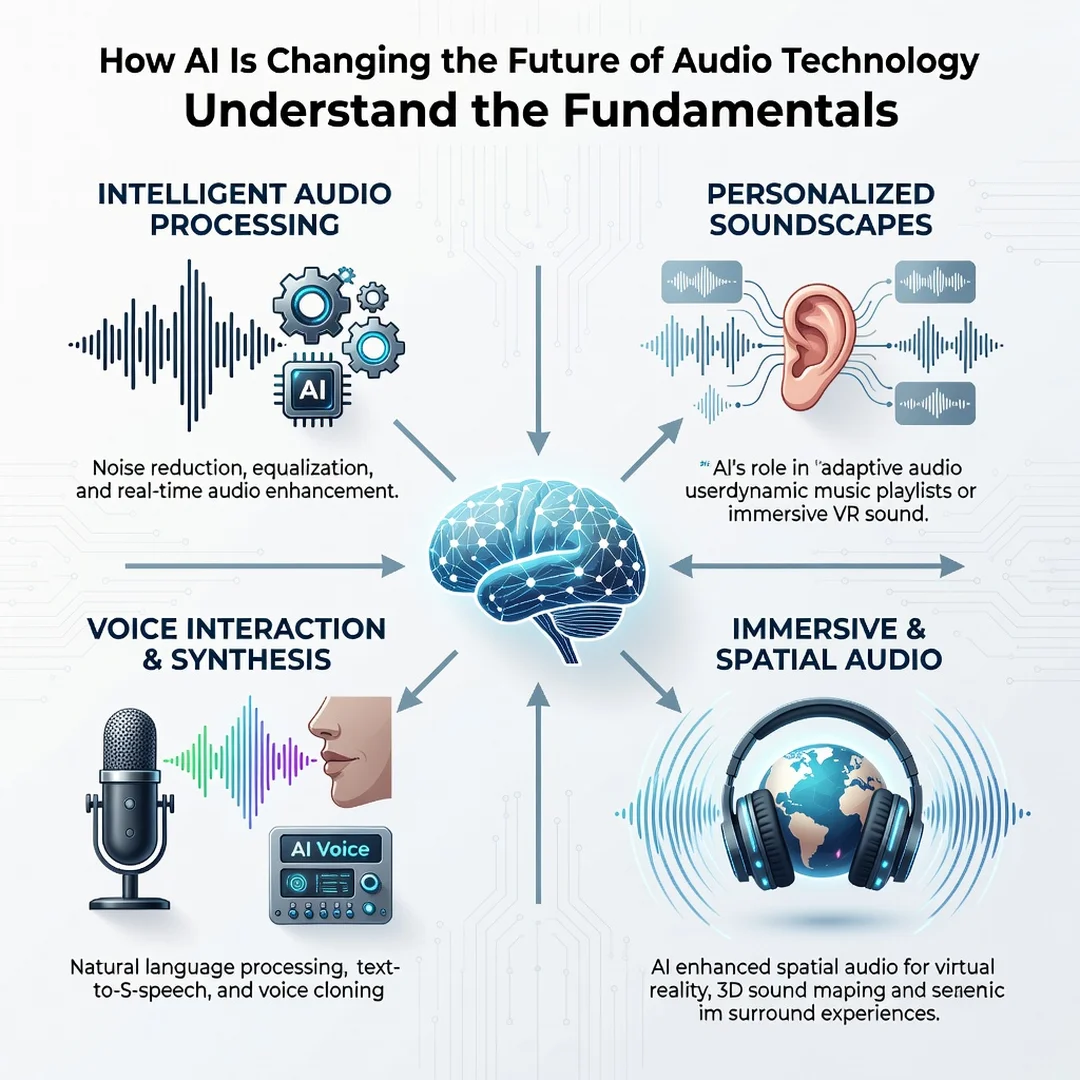
Learn the basic vocabulary of AI audio: noise suppression, source separation, speech-to-text, generative audio, and adaptive equalization. You do not need to become an engineer, but you should know what these terms mean so you can compare products and ask better questions. Read reputable reviews, watch demonstrations, and identify which capabilities matter for your situation. For example, a podcaster may care most about source separation and noise removal, while a commuter may prioritize adaptive noise cancellation.
Step 2: Assess your starting point
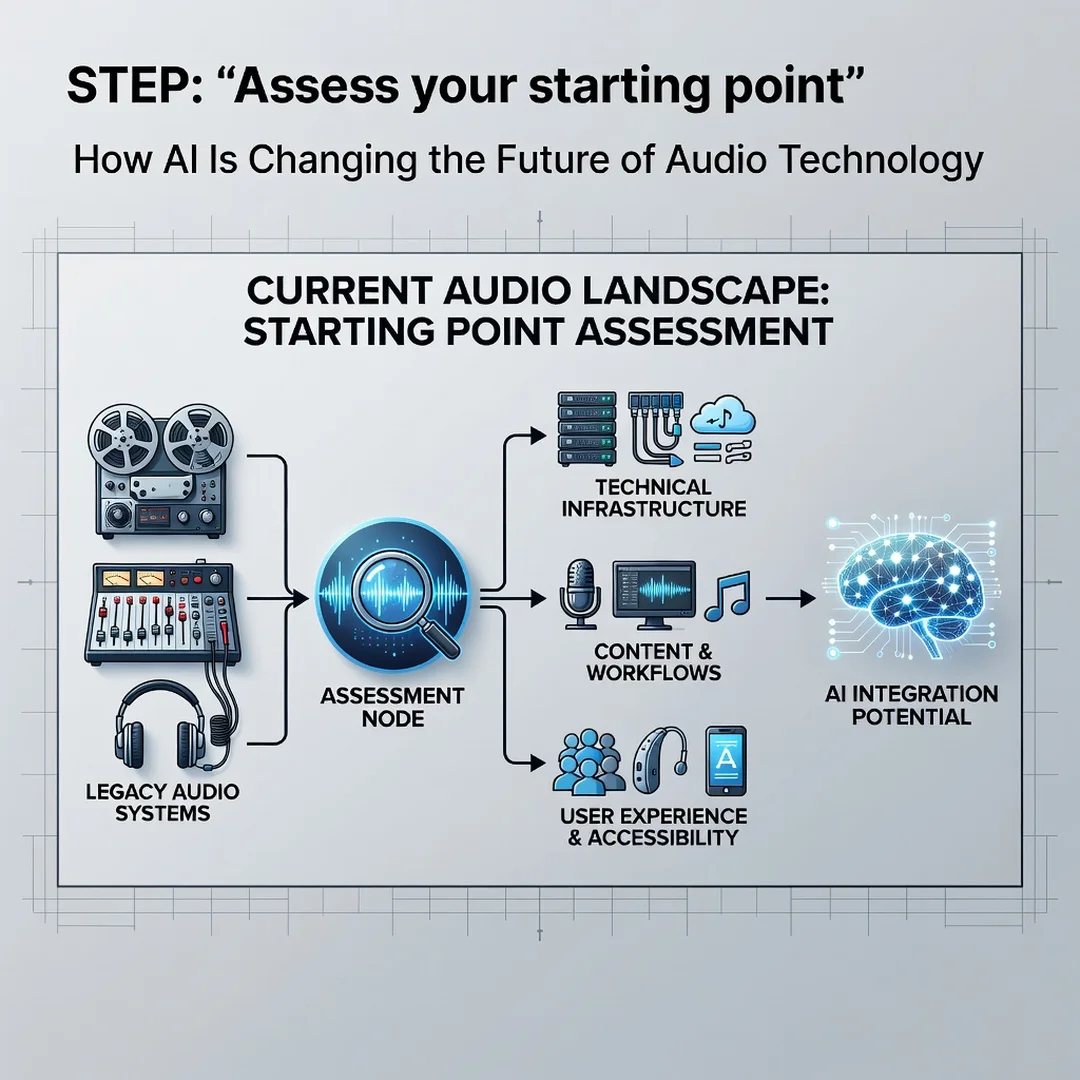
Before buying anything, evaluate your current setup. What microphones, headphones, or speakers do you already own? What specific problems do you experience? Record a short sample of your typical audio environment—a meeting, a voice memo, a room recording—and listen critically. Note issues like echo, hiss, distant voices, or inconsistent volume. This baseline will help you measure improvement later and prevent you from purchasing features you do not need.
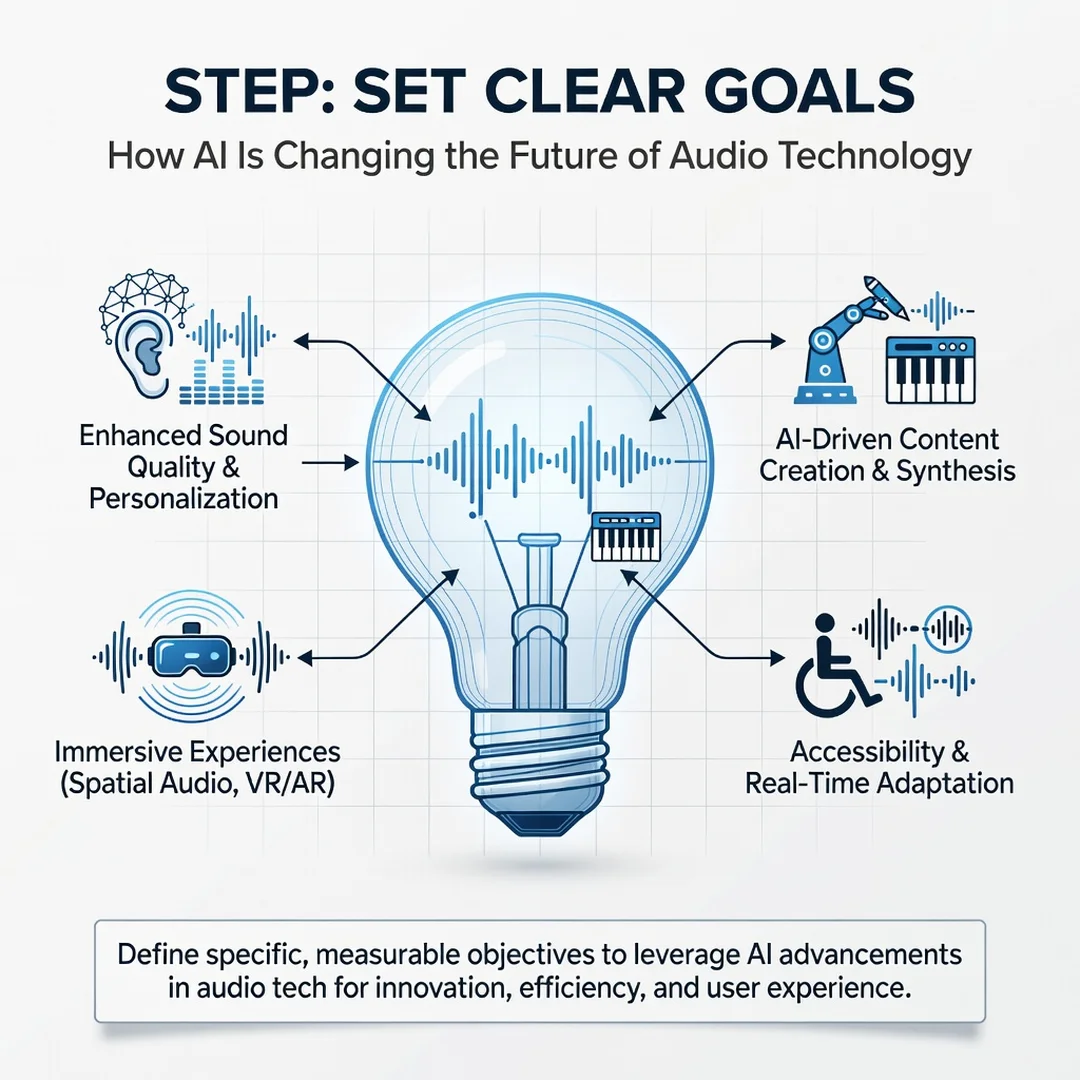
Step 3: Set clear goals
Define what success looks like in concrete terms. Instead of “better sound,” aim for “reduce background noise on client calls so participants can hear me clearly” or “transcribe interviews with fewer than five errors per hundred words.” Goals should be specific, measurable, and tied to a real outcome. If you are evaluating tools for a team, agree on shared goals and assign someone to track them. Clear goals also make it easier to justify budget and time.
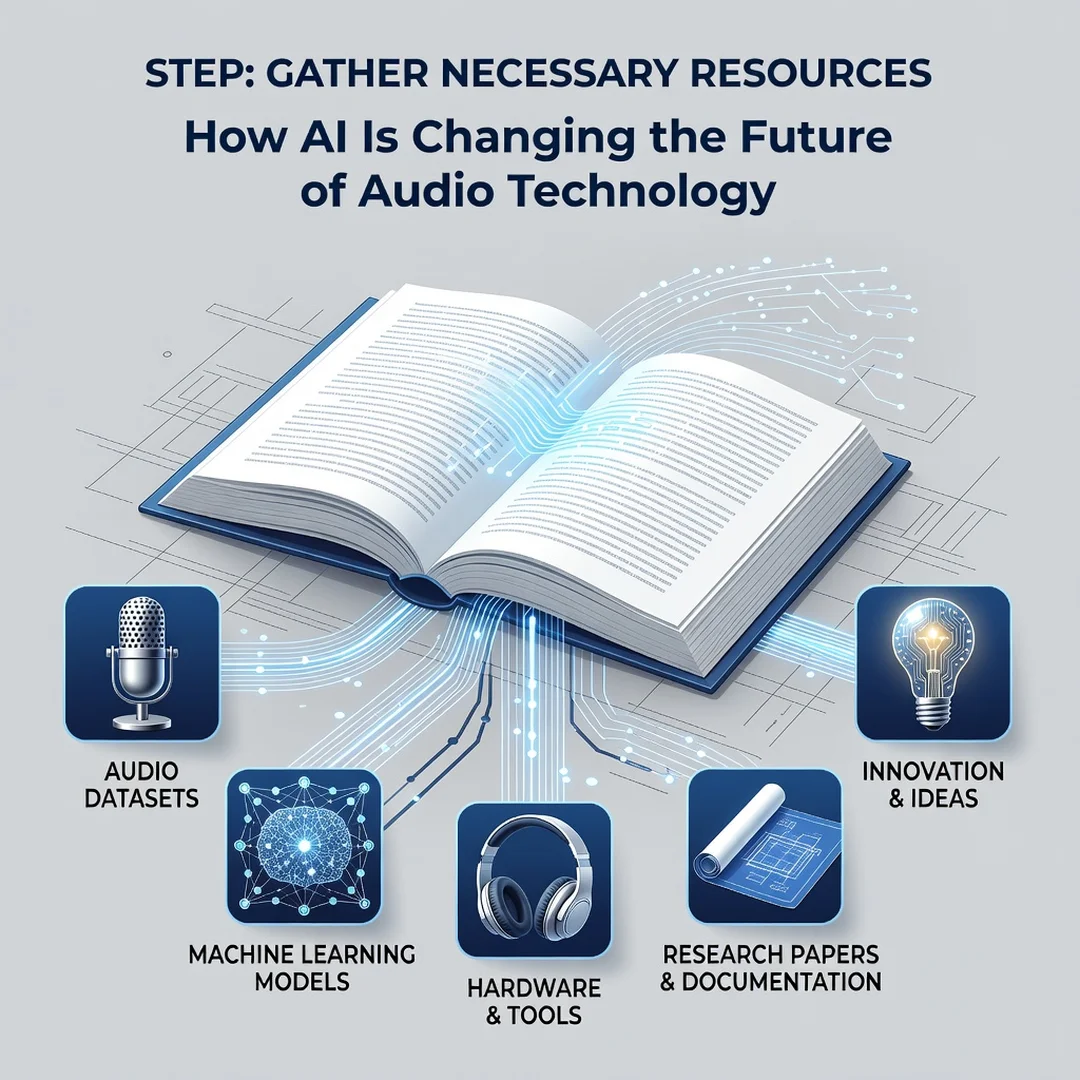
Step 4: Gather necessary resources
Identify the hardware, software, and knowledge you need. This may include a compatible microphone, a computer or phone with sufficient processing power, and subscriptions to AI audio services. Check system requirements carefully; some real-time AI features require newer chips or dedicated neural processing units. Allocate time for learning—most tools have a short but real learning curve. If you work in a regulated industry, consult legal or compliance teams about recording and transcription policies.
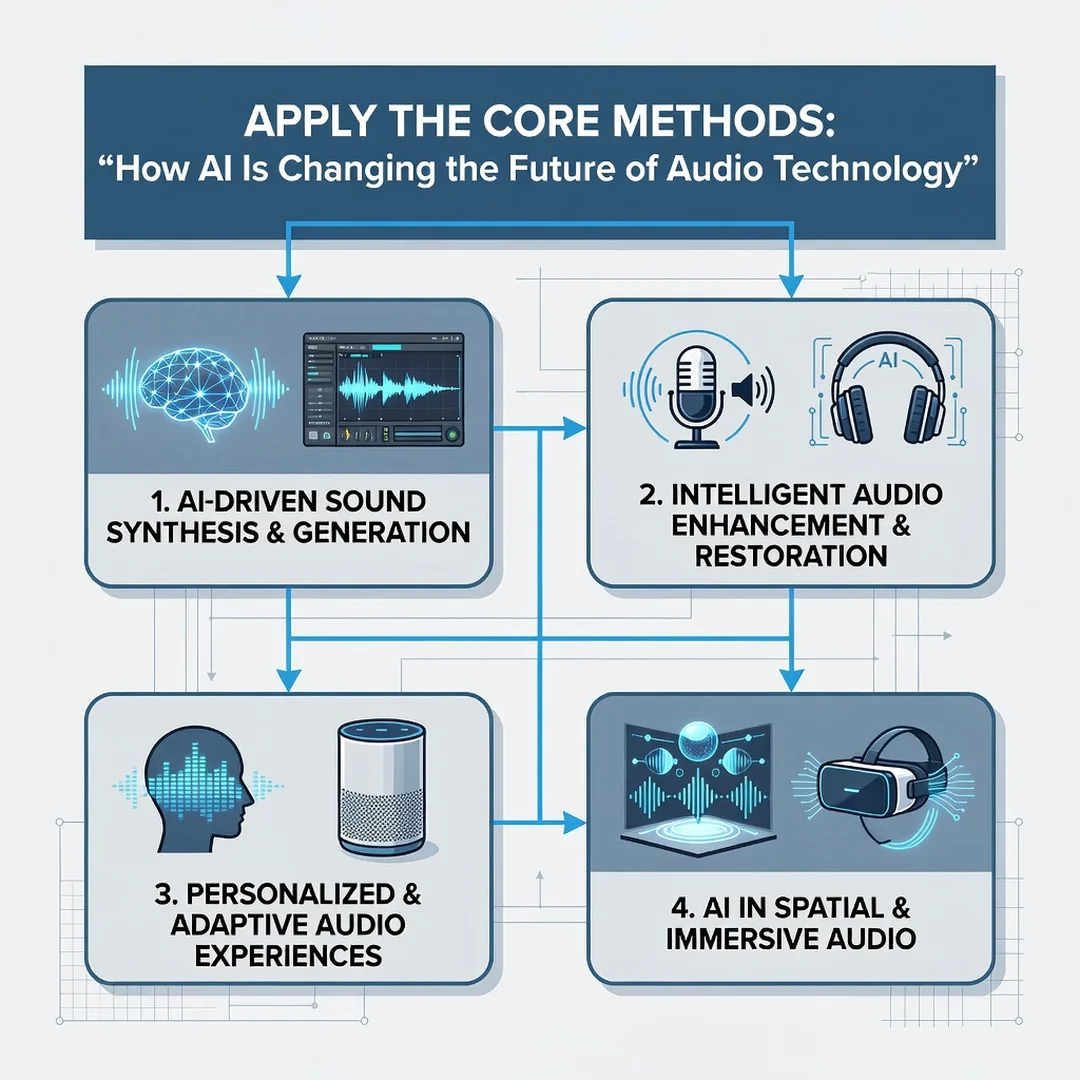
Step 5: Apply the core methods
Begin using the tools in low-stakes situations. Try noise suppression on a practice call, run a test transcription on an old recording, or use source separation on a song you know well. Compare the output to your baseline from Step 2. Adjust settings one at a time so you understand what each control does. Keep a simple log of what you changed and the result. This hands-on experimentation builds intuition faster than reading manuals alone.
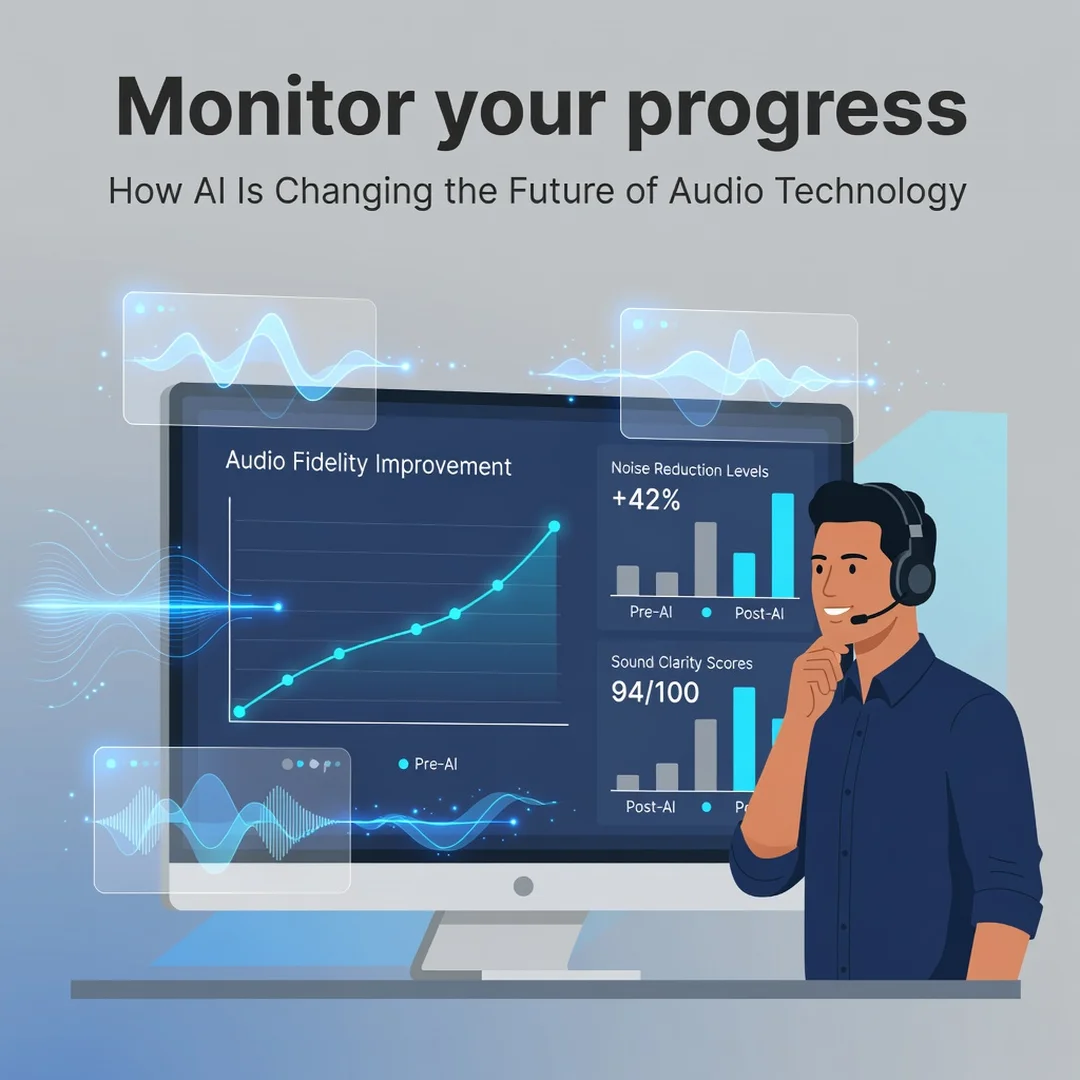
Step 6: Monitor your progress
After a few weeks, review your goals and your logs. Are calls clearer? Is transcription accuracy improving? Have you saved time? If a tool is not delivering, try a different configuration or consider an alternative. If it is working, document your settings and share them with others who have similar needs. Revisit your goals periodically, because AI audio technology evolves quickly and new capabilities may become relevant to you.
FAQ
What should I know about How AI Is Changing the Future of Audio Technology?
The most important thing to know is that AI is already part of everyday audio, not a future possibility. It powers noise cancellation, voice assistants, transcription, music recommendation, and generative composition. Understanding the fundamentals helps you make informed decisions about devices, software, and workflows. You should also know that AI audio is not perfect; it works best when combined with good hardware, reasonable expectations, and human review. Finally, privacy and data handling matter, especially for sensitive conversations. By focusing on your specific needs and testing tools with your own audio, you can capture the benefits while avoiding hype-driven purchases.
Who is this guide for?
This guide is for anyone who wants clear, practical information about AI in audio. That includes podcasters, musicians, remote workers, students, accessibility advocates, and general consumers comparing headphones or hearing aids. It is also useful for small business owners evaluating call center software or transcription services. No technical background is required. The step-by-step approach is designed to be followed by individuals and teams alike, with an emphasis.
You now have a solid foundation for How AI Is Changing the Future of Audio Technology. Apply the best practices above and revisit this guide as your needs evolve.