Modern earbuds have evolved far beyond simple audio playback. Thanks to embedded AI, today’s models can analyze your environment, your ears, and the music itself in real time—automatically adjusting sound to deliver clarity, depth, and balance no matter where you are. If you’ve ever wondered why premium earbuds sound noticeably better, AI is the answer.
In this article, we’ll break down exactly how AI improves sound quality, from adaptive noise cancellation to personalized audio tuning. You’ll learn what to look for and how to get the most from your next pair of earbuds.
Introduction
Modern wireless earbuds have become remarkably sophisticated. What once required a dedicated headphone amplifier and careful acoustic tuning can now be handled by tiny processors inside a device small enough to disappear into your ear. One of the most significant developments in recent years is the integration of artificial intelligence into true wireless earbuds. This article explores how modern earbuds use AI to improve sound quality, with clear, practical guidance for anyone curious about what happens between the audio file on your phone and the sound reaching your eardrum.
Understanding the fundamentals of how modern earbuds use AI to improve sound quality helps you make informed decisions—whether you are buying a new pair, troubleshooting poor audio, or simply want to get the most from the earbuds you already own. The core idea is straightforward: AI acts as an intelligent real-time audio engineer, adjusting sound based on your ear shape, your environment, and the content you are listening to. But the details matter, and reliable information paired with consistent habits leads to better long-term outcomes in sound enjoyment and hearing comfort.
Key Concepts
Before diving into the specifics, it helps to understand a few foundational terms. These concepts appear repeatedly when manufacturers describe AI-powered earbuds, and knowing them will help you separate marketing buzzwords from genuine technology.
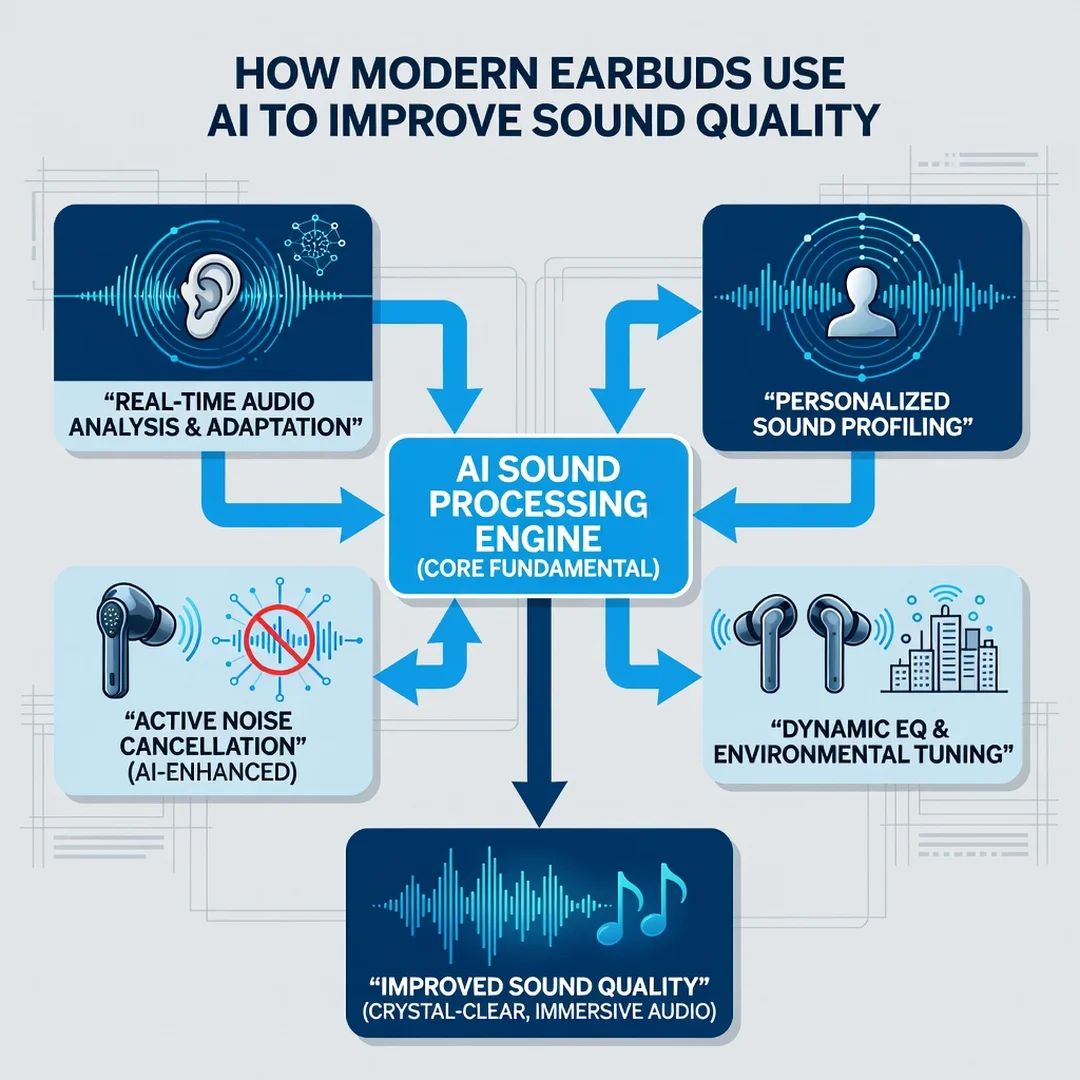
- Real-time audio processing: Unlike traditional headphones that apply a fixed sound curve, AI earbuds analyze and modify audio dozens or hundreds of times per second. The processor inside the earbud makes decisions on the fly.
- Adaptive EQ (equalization): EQ adjusts the balance between bass, mids, and treble. AI-driven EQ changes automatically based on what you are listening to—a podcast might get clearer speech emphasis, while a symphony receives a wider dynamic range.
- Personalized sound profiles: Some earbuds run a hearing test or use microphones to measure how sound reflects inside your ear canal. The AI then creates a custom sound profile unique to your ears.
- Active Noise Cancellation (ANC) with AI: Traditional ANC uses fixed filters. AI-enhanced ANC listens to environmental noise in real time and generates a canceling wave that adapts as noise changes—say, when you move from a quiet room to a busy street.
- Transparency mode: The opposite of ANC. AI can intelligently let outside sound in while reducing harsh noises, making conversation easier without removing your earbuds.
- Computational audio: An umbrella term for using algorithms and machine learning to improve sound quality, spatial effects, and clarity beyond what hardware alone can achieve.
These technologies rely on small but powerful chips—often called neural processing units (NPUs)—that run machine learning models directly on the earbud. This on-device processing minimizes latency and preserves battery life, which is critical for a device that must last several hours per charge.
Deep Dive
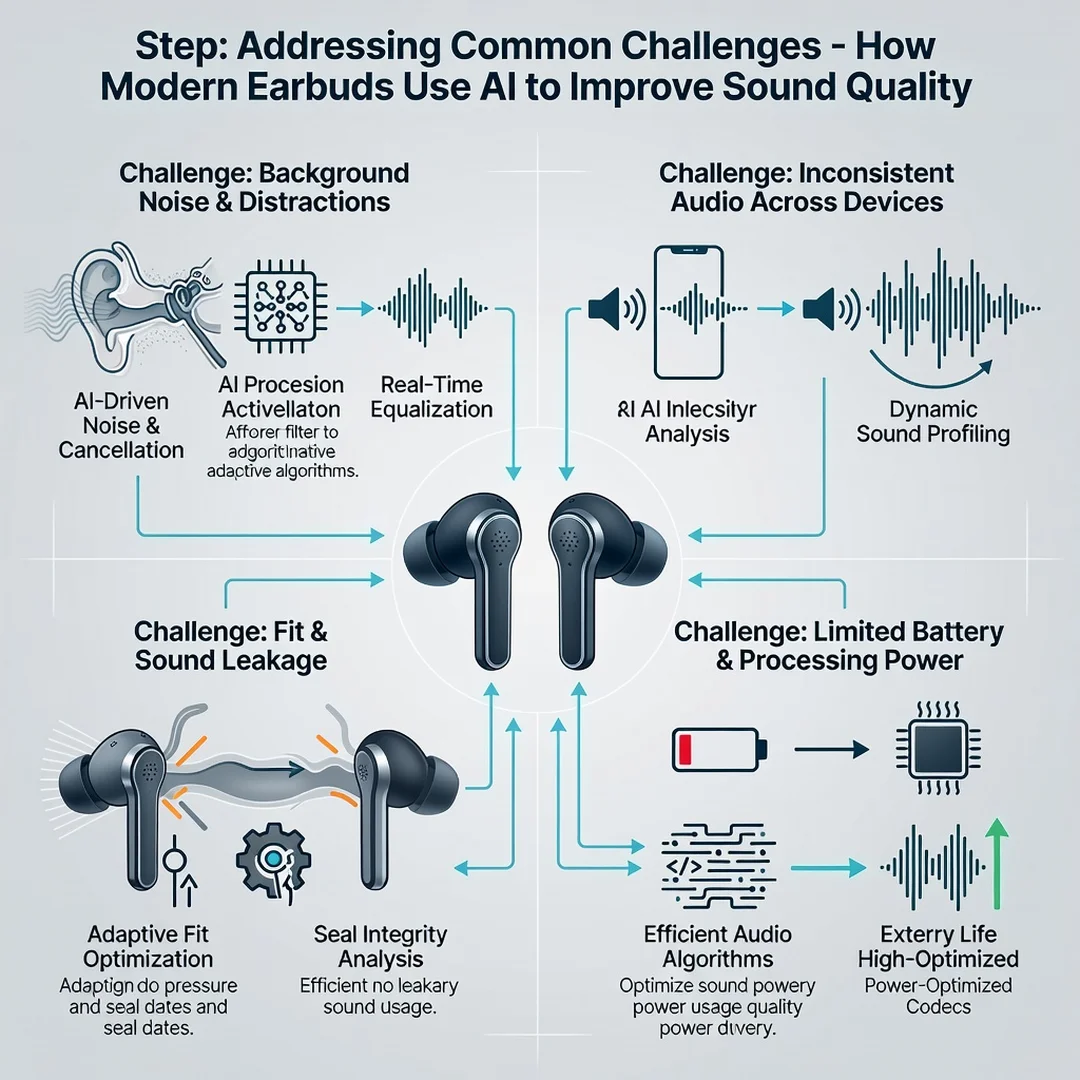
To truly understand how AI improves sound quality, it helps to follow the audio signal chain. The journey begins when your phone or streaming service sends a digital audio file to the earbuds. In a traditional setup, the earbud converts that digital signal to analog sound using a fixed tuning. In an AI-powered earbud, several intelligent steps occur before you hear anything.
First, the AI analyzes the incoming audio content. It can detect whether the track is speech, music, or a movie soundtrack. For speech, the algorithm boosts frequencies critical for intelligibility and reduces background rumble. For music, it may preserve the artist’s intended mix while gently correcting for the earbud’s acoustic limitations. This content-aware processing happens in milliseconds.
Second, the earbuds account for your unique ear. Everyone’s ear canal shape acts as a small acoustic chamber, boosting some frequencies and absorbing others. AI can measure this using a brief test tone played through the earbud and captured by an inward-facing microphone. The resulting correction curve is applied to all audio, making the sound more consistent and balanced for you specifically.
Third, environmental adaptation comes into play. Outward-facing microphones constantly sample ambient noise. AI models distinguish between steady noise (airplane engine, fan) and sudden sounds (a car horn, a door slam). For steady noise, ANC generates a precise opposing wave. For sudden sounds, the AI may momentarily reduce ANC to avoid a pressurized feeling, or it may enhance transparency so you remain aware. This dynamic balancing act improves perceived sound quality because you hear more of your audio and less of the distraction.
Fourth, AI assists with spatial audio. By tracking head movements using gyroscopes and accelerometers, earbuds can place sound sources in a virtual space around you. AI ensures that as you turn your head, the audio stage remains stable, which is especially useful for movies and games. Without AI, this effect would feel unnatural and disorienting.
Finally, AI helps with upscaling compressed audio. Many streaming services deliver lossy files to save data. AI models trained on high-quality recordings can infer and restore some of the missing detail, making low-bitrate audio sound closer to lossless. This is not magic—it cannot recover what was never there—but it can reduce artifacts like harshness and smearing.
It is worth noting that not all earbuds implement AI equally. Some use it only for ANC, while others apply it across the entire chain. The best results come from earbuds that combine multiple AI features and allow you to customize or disable them as needed.
Best Practices
Getting the most from AI-enhanced earbuds requires more than just buying a premium pair. These best practices will help you maximize sound quality and longevity.
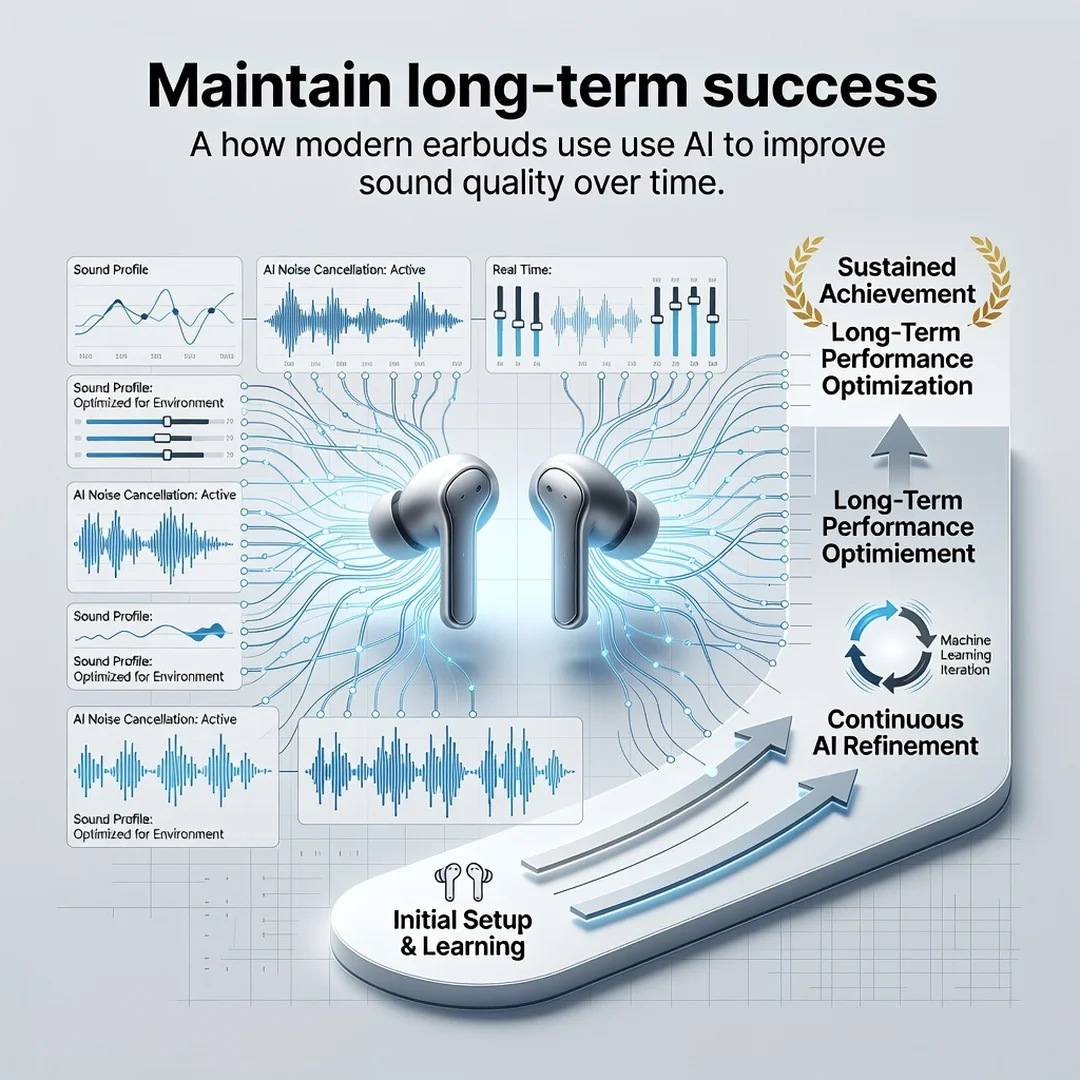
- Run the personalization test: Most AI earbuds include a setup routine that measures your hearing or ear canal. Do not skip it. This step is the foundation for all subsequent AI adjustments.
- Keep firmware updated: AI models improve over time. Manufacturers release firmware updates that refine algorithms, add features, and fix bugs. Enable automatic updates if available.
- Choose the right ear tips: A proper seal is critical for both noise cancellation and bass response. AI can compensate for a poor seal to some degree, but a good physical fit always delivers better results.
- Use the companion app: Most AI earbuds come with an app that lets you adjust EQ, ANC levels, and transparency modes. Spend time exploring the settings rather than relying on defaults.
- Test in different environments: AI adapts to your surroundings. Try your earbuds in a quiet room, on a busy street, and in a noisy office. Note how the sound changes and whether you prefer a different ANC or EQ setting for each.
- Manage battery life: AI processing consumes power. If you need maximum battery, consider disabling advanced features like spatial audio or adaptive EQ when they are not essential.
- Clean your earbuds regularly: Microphones and sensors can become clogged with earwax and debris, which degrades AI performance. Follow the manufacturer’s cleaning instructions.
Consistent habits like these ensure that the AI inside your earbuds has the best possible data to work with, leading to better long-term outcomes in sound quality and user satisfaction.
Step-by-Step Guide to Optimizing AI Earbud Sound
The following steps will help you systematically improve the sound quality of your AI-powered earbuds, regardless of brand or model.
Step 1: Understand the fundamentals
Start by reading your earbud’s manual or online documentation to identify which AI features it actually has. Look for terms like adaptive EQ, personalized sound, AI-powered ANC, and computational audio. Knowing what your earbuds can do prevents you from expecting features they do not have. This foundational knowledge also helps you evaluate marketing claims and focus on settings that matter.
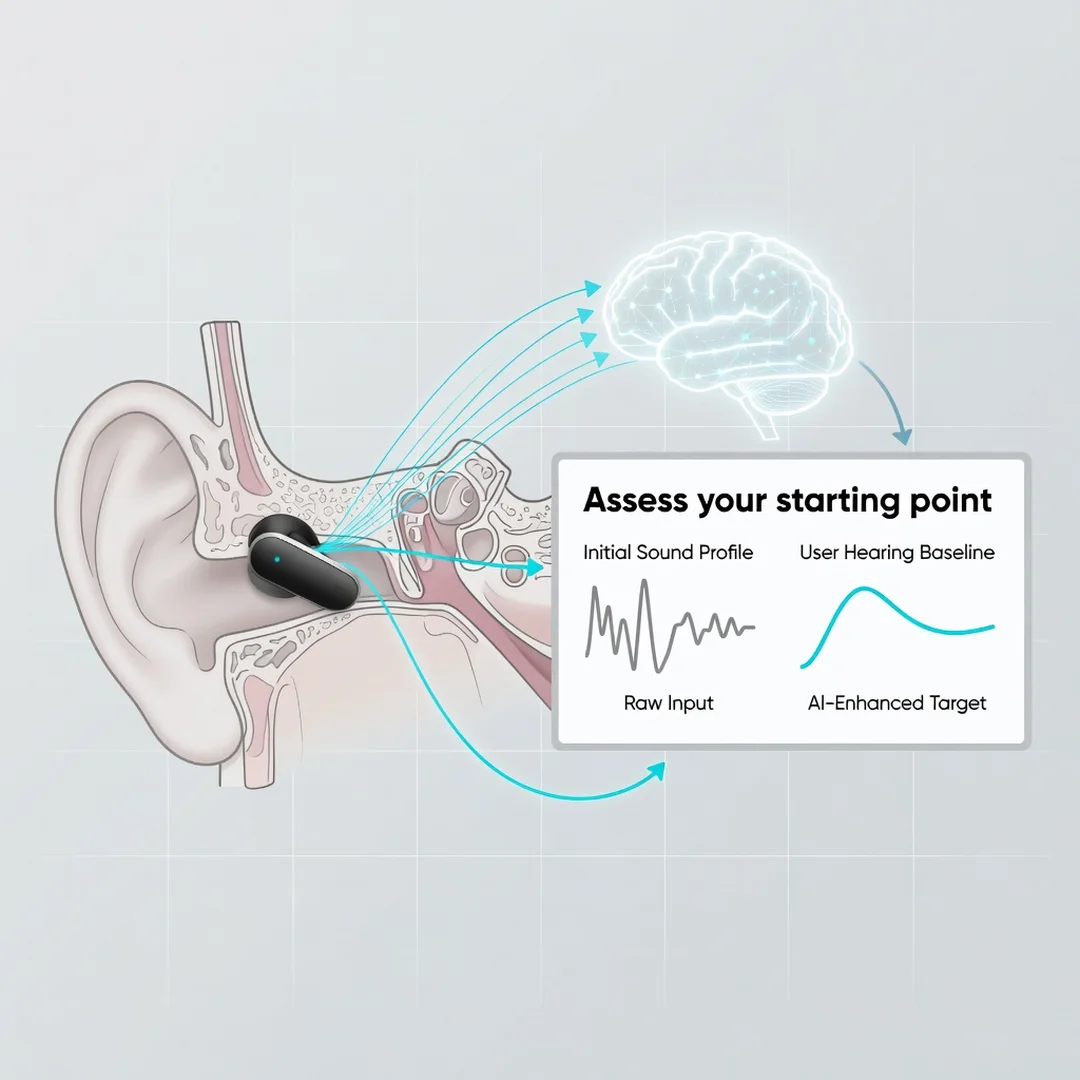
Step 2: Assess your starting point
Before making changes, listen to a few familiar tracks and note what you hear. Is the bass muddy? Are voices hard to understand? Does outside noise intrude? Write down your observations. Then check your current settings in the companion app—note the EQ preset, ANC level, and whether personalization is enabled. This baseline will help you measure improvement later.
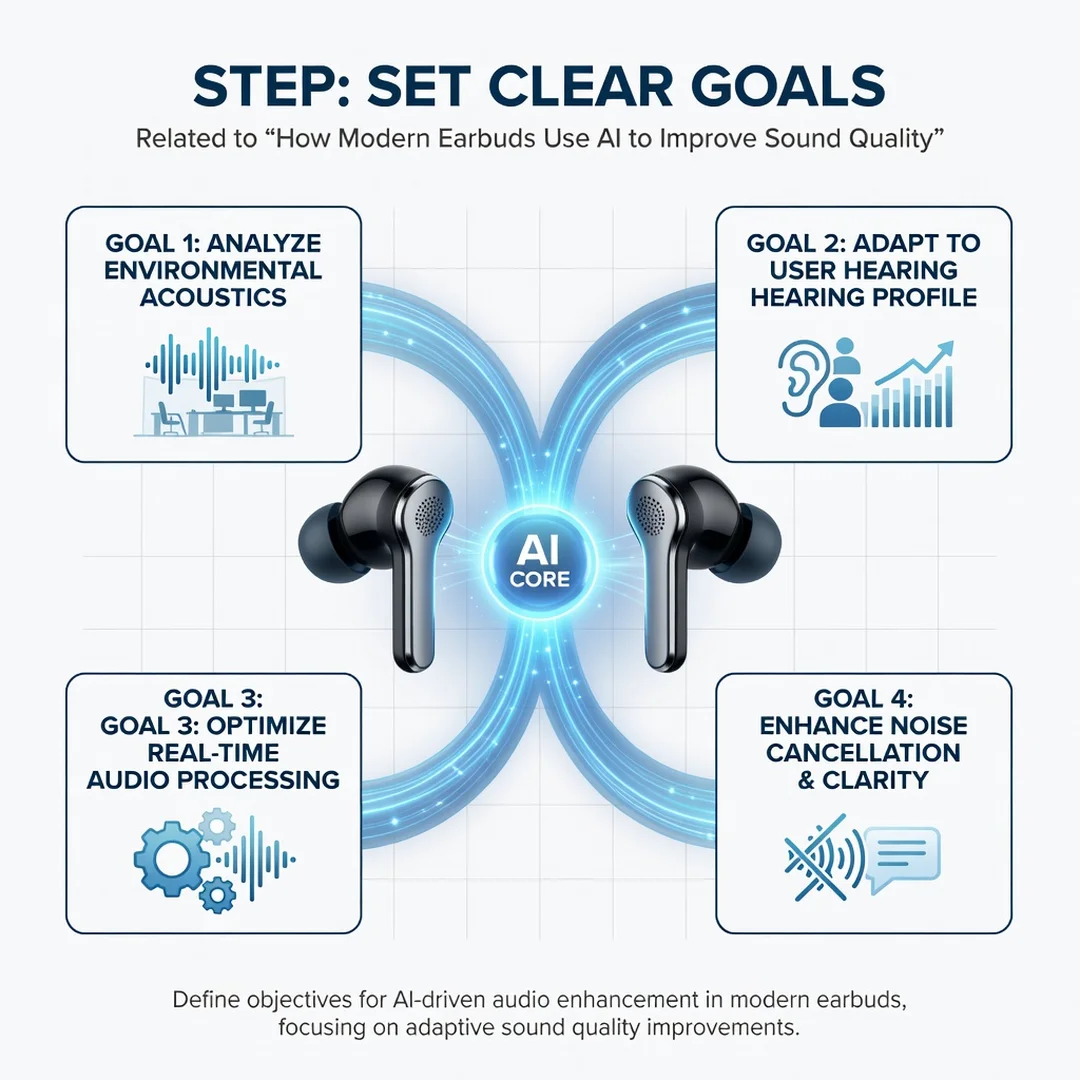
Step 3: Set clear goals
Decide what you want to improve. Common goals include clearer speech for podcasts, deeper bass for music, better noise cancellation for commuting, or a more natural sound for movies. Different AI features serve different goals. For example, if speech clarity is your priority, focus on adaptive EQ and transparency mode. If immersion is the goal, prioritize spatial audio and ANC. Clear goals keep your adjustments purposeful.

Step 4: Gather necessary resources
You will need your earbuds, a charged case, your phone with the companion app installed, and a quiet space for the initial setup. Some apps require you to grant microphone permissions and location access (for environment detection). Have a few test tracks ready—one with heavy bass, one with vocals, and one with complex instrumentation. These will help you evaluate changes across different content types.
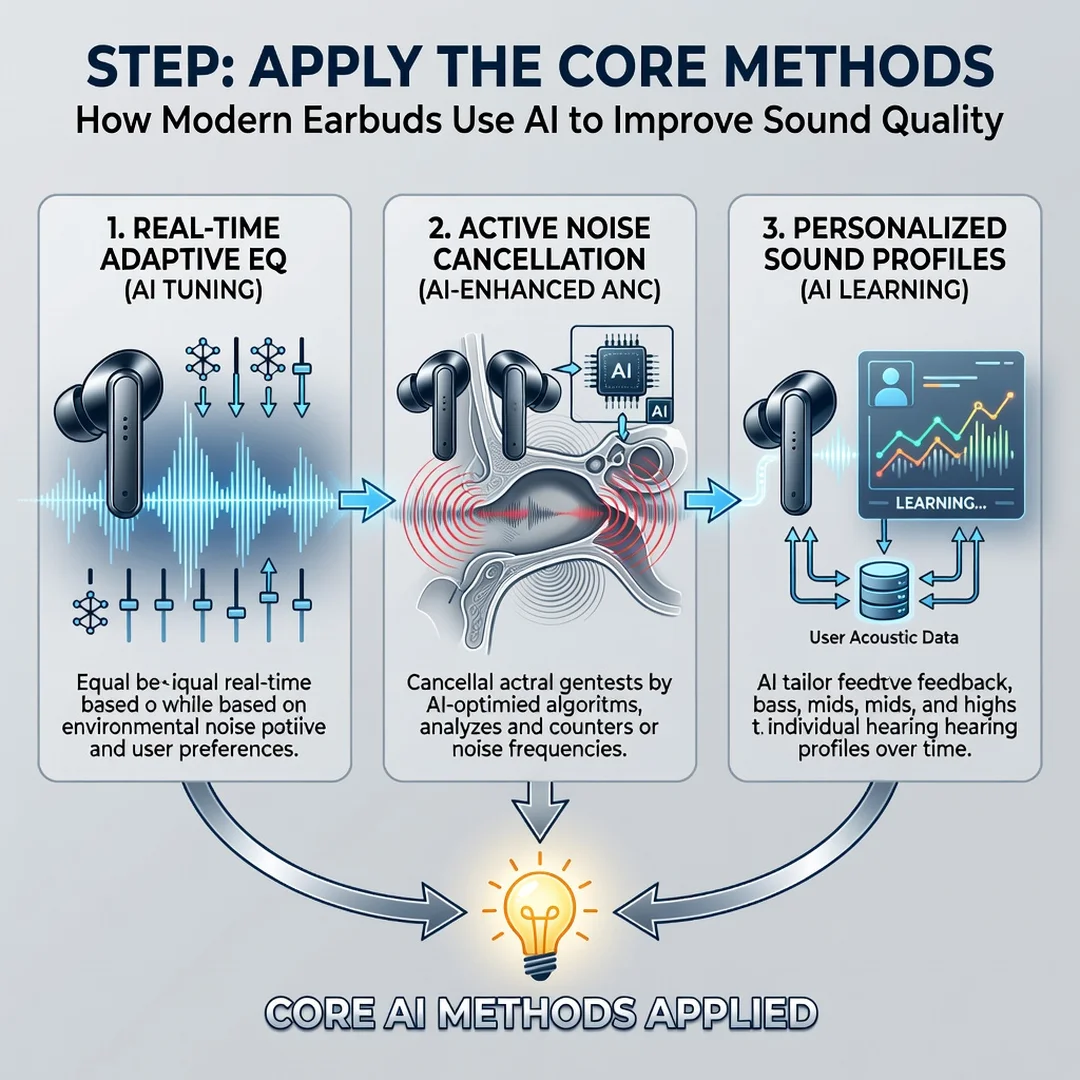
Step 5: Apply the core methods
Now put the AI to work. Run the personalization or hearing test if available. Enable adaptive EQ and set ANC to your preferred level. If your earbuds offer a “fit test,” perform it and adjust ear tips until you get a good seal. Try different EQ presets and note which sounds best to you. For spatial audio, enable it only for movies and games; for music, it can sometimes distort the intended mix. Make one change at a time and listen carefully before moving to the next.
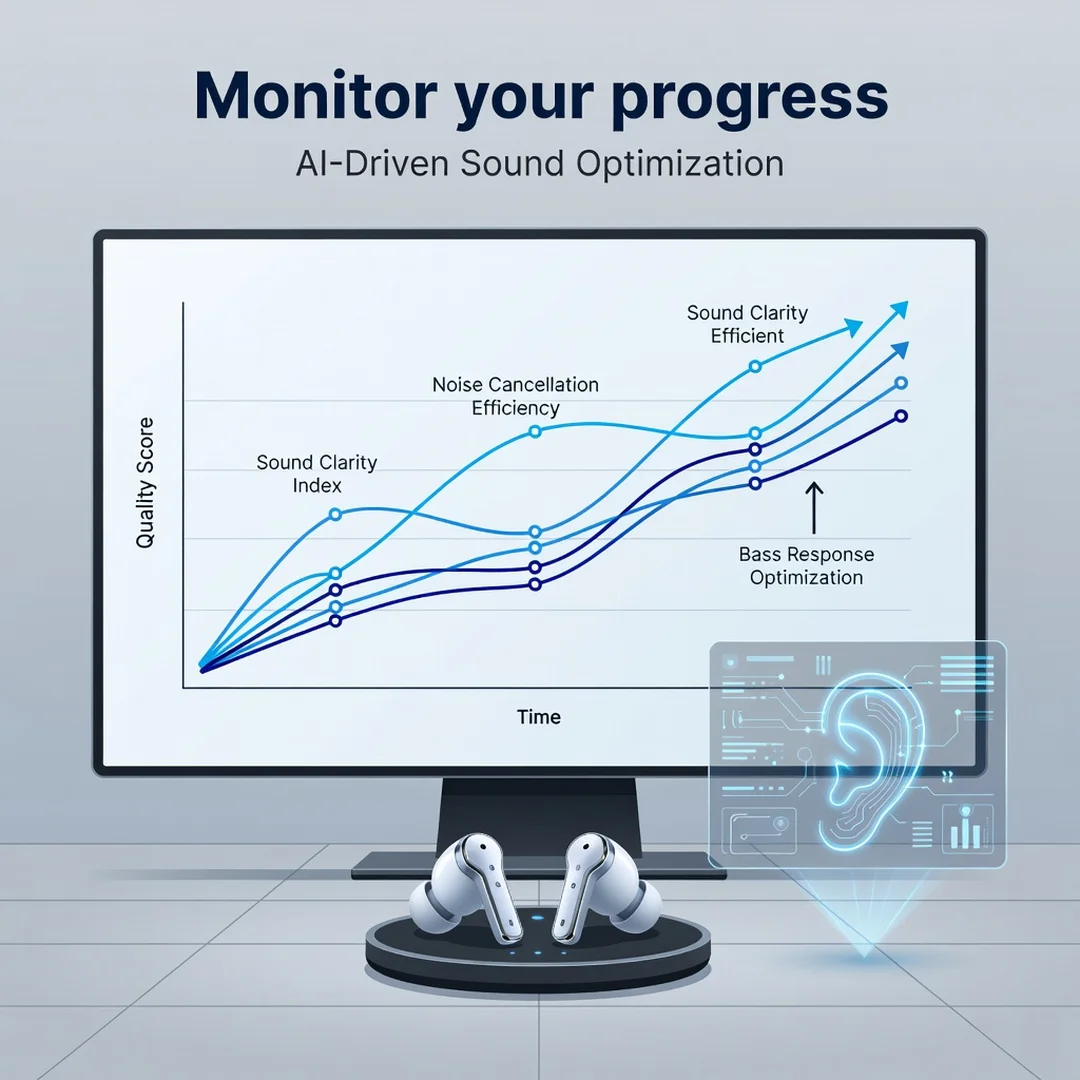
Step 6: Monitor your progress
After a week of use, revisit your initial observations. Are voices clearer? Is background noise less intrusive? If something still feels off, adjust one setting and test again. Keep the firmware updated and re-run personalization if you change ear tips or notice a shift in sound. Over time, you will develop a sense of which AI features work best for different situations, and you can create custom presets for commuting, working, and relaxing.
FAQ
What should I know about How Modern Earbuds Use AI to Improve Sound Quality?
You should know that AI in earbuds is not a single feature but a collection of technologies working together. These include adaptive EQ, personalized sound profiles, AI-enhanced noise cancellation, and spatial audio. Each addresses a different aspect of sound quality—from matching your hearing to reducing distractions.
You now have a solid foundation for How Modern Earbuds Use AI to Improve Sound Quality. Apply the best practices above and revisit this guide as your needs evolve.