AI-powered music mastering has transformed how artists and producers prepare tracks for release. Instead of booking expensive studio time, you can now upload a mix and receive a polished, release-ready master in minutes—powered by machine learning models trained on thousands of professional recordings.
But what actually happens inside these tools? In this article, we break down the technology behind AI-powered music mastering, from intelligent EQ and dynamic range optimization to loudness matching for streaming platforms. You’ll learn how the algorithms work and how to use them effectively on your own music.
Introduction
Music mastering was once the exclusive domain of specialist engineers working in acoustically treated rooms with racks of expensive analog gear. Today, a growing share of that work is performed or assisted by artificial intelligence. AI-powered music mastering uses machine learning models to analyze an audio track and apply EQ, compression, limiting, stereo enhancement, and loudness normalization automatically, often in minutes and at a fraction of the cost of a traditional session.
This article explores the technology behind AI-powered music mastering with clear, practical guidance. You will learn how these systems actually work, what separates a good result from a bad one, and how to use them without damaging the emotional character of your music. Understanding the fundamentals of AI-powered music mastering helps you make informed decisions about when to trust automation and when to bring in a human ear.
Key Concepts
Before evaluating any AI mastering tool, you need a working vocabulary. The field blends digital signal processing (DSP), machine learning, and the psychoacoustics of how humans perceive loudness and tone. These are the core ideas that matter.
Machine learning models trained on professional masters
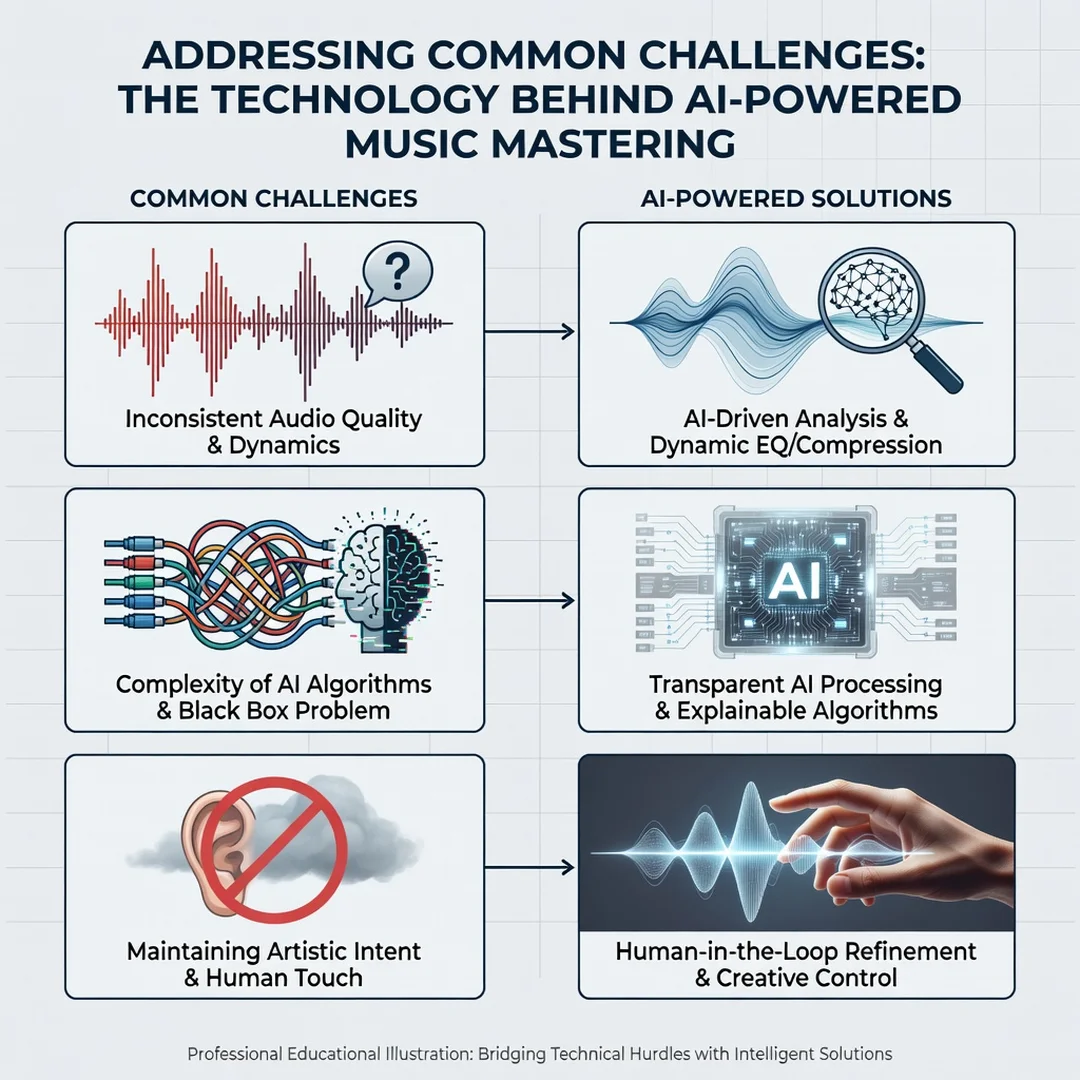
Most AI mastering engines are trained on large datasets of professionally mastered tracks paired with their unmastered or reference mixes. The model learns statistical relationships between the two: what spectral balance, dynamic range, and stereo width typically look like in a finished commercial release. Some systems use convolutional neural networks that operate directly on audio waveforms or spectrograms. Others use a hybrid approach, where a model predicts settings for a traditional processing chain rather than generating audio sample by sample.
Reference matching versus adaptive processing
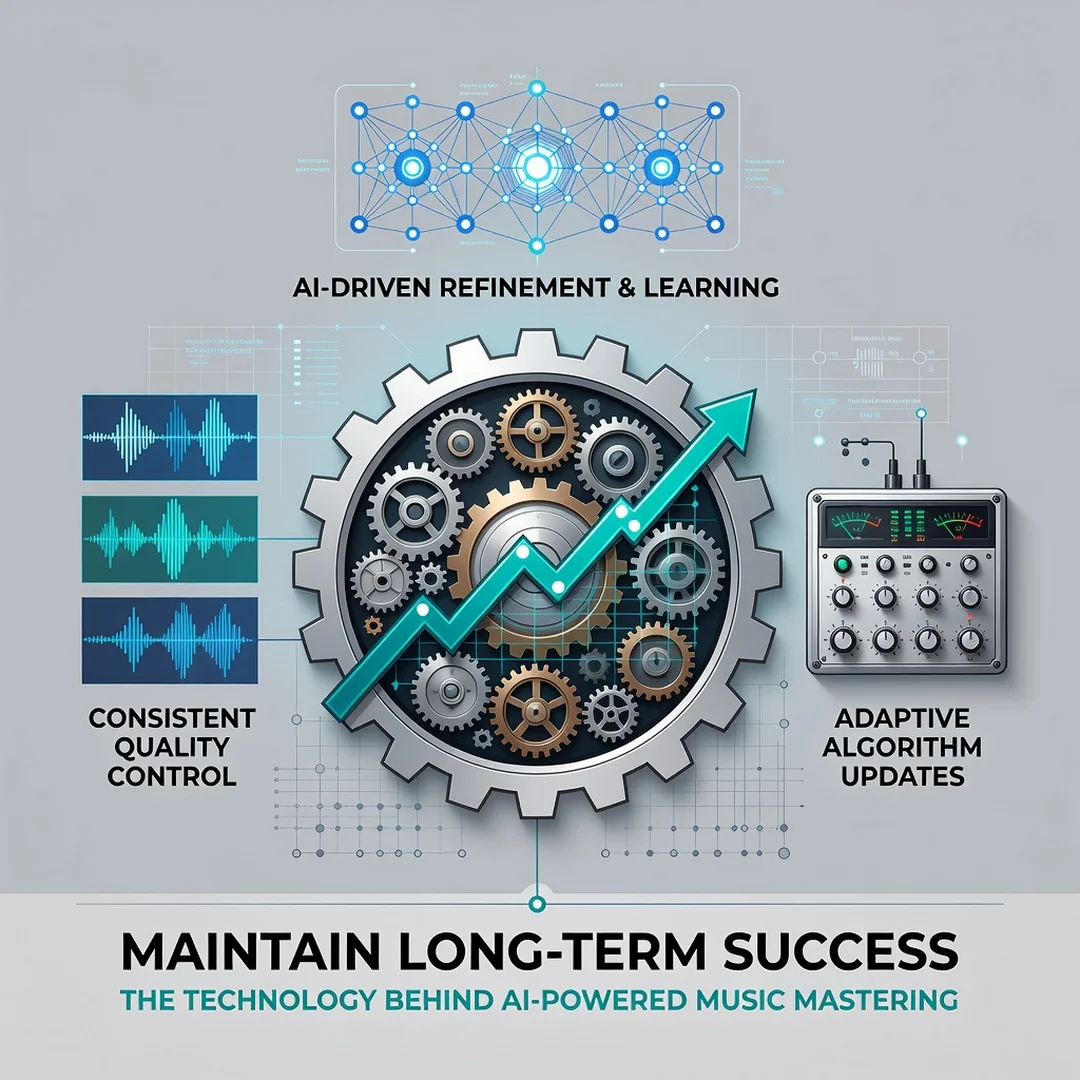
Two common modes exist. Reference matching compares your track to a target song or genre profile and nudges your audio toward that fingerprint. Adaptive processing instead analyzes your track on its own terms, detecting problem frequencies, inconsistent dynamics, and tonal imbalances, then corrects only what falls outside acceptable ranges. Reference matching gives predictable, genre-appropriate results; adaptive processing preserves more of your original intent.
Loudness normalization and LUFS
Streaming platforms normalize playback to a target loudness, commonly around -14 LUFS integrated for major services. AI mastering tools typically measure your track in LUFS (Loudness Units Full Scale) and adjust gain and limiting to hit a chosen target. This matters because pushing a master louder than the platform target can trigger turn-down, erasing the perceived advantage while adding distortion. True peak limiting, measured in dBTP, is equally important to prevent clipping during lossy encoding.
Latency, resolution, and processing block size
AI mastering operates offline, not in real time, which allows large processing blocks and high-resolution analysis. Sample rates of 44.1 kHz to 96 kHz and bit depths of 24-bit or 32-bit float are standard. Higher internal resolution reduces the risk of rounding errors during aggressive processing, though the final delivery format is often 16-bit or 24-bit WAV.
- Spectrogram: A visual representation of frequency content over time, often used by models to detect tonal issues.
- Dynamic range: The difference between the quietest and loudest parts of a track; over-compression reduces it audibly.
- Multiband processing: Applying different compression or EQ to separate frequency bands independently.
- True peak: The actual maximum level after digital-to-analog reconstruction, which can exceed sample peaks.
Deep Dive
Under the hood, AI mastering is a pipeline rather than a single algorithm. Understanding the stages helps you predict where things can go wrong.
Stage 1: Input analysis
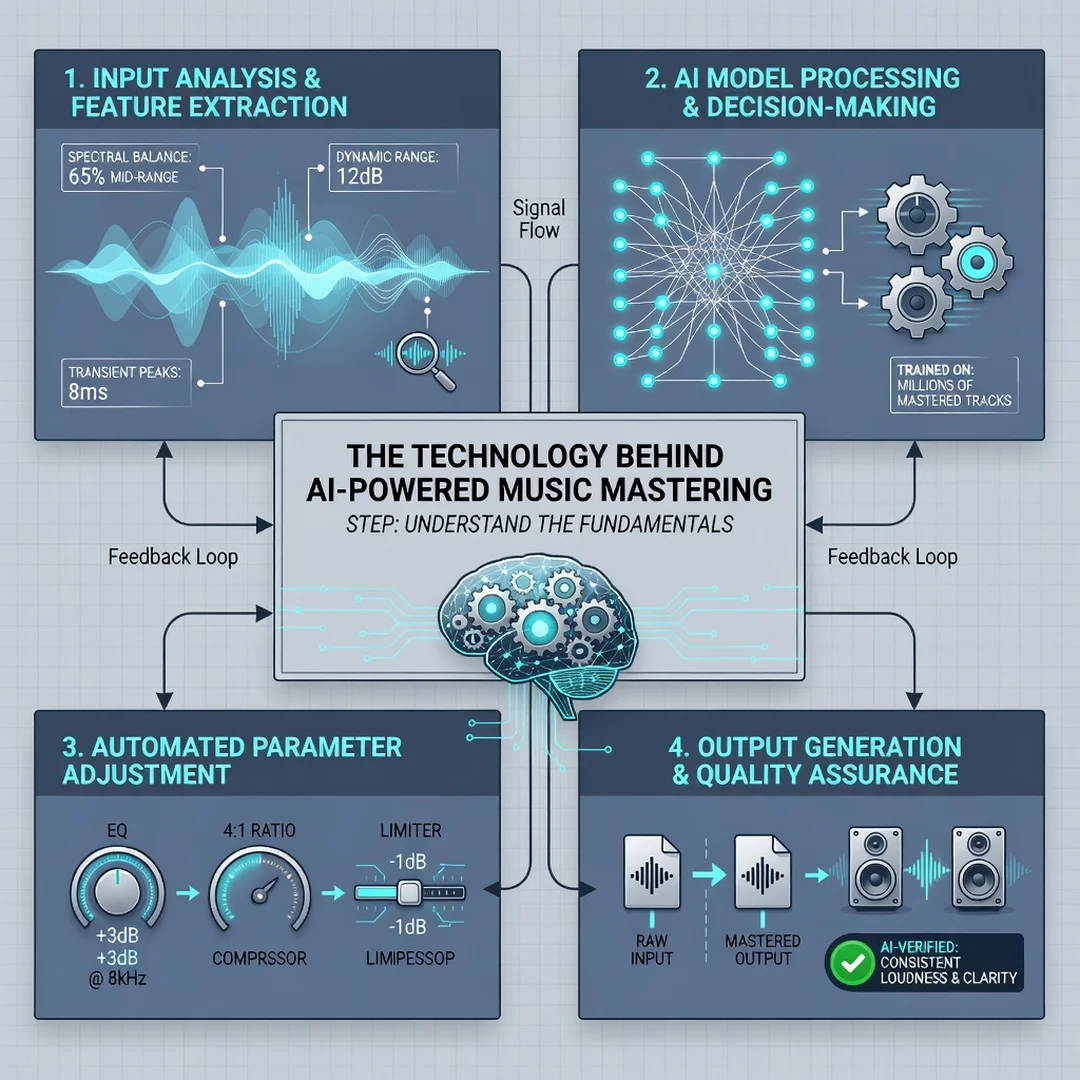
The engine first decodes your file and runs an analysis pass. It measures integrated and short-term loudness, true peak, spectral centroid, dynamic range, and stereo correlation. Some tools also perform source separation, isolating vocals, drums, and bass to apply targeted processing. This analysis drives every later decision, so a poor-quality input file, such as a heavily compressed MP3, will produce a poor master.
Stage 2: Corrective processing
The system applies subtle EQ to address resonances or tonal imbalances, then multiband compression to even out frequency-dependent dynamics. This stage is where AI often outperforms a novice human, because it does not get tired or fooled by a familiar listening environment. However, it can also over-correct, especially on tracks with intentional lo-fi or distorted aesthetics.
Stage 3: Tonal shaping and stereo enhancement
Here the model applies broad tonal curves and, if enabled, stereo widening or narrowing. Widening can make a mix feel more immersive, but excessive widening causes phase problems that collapse badly in mono. Many AI tools offer a mono-compatibility check; use it.
Stage 4: Limiting and loudness targeting
The final stage raises overall level and applies a limiter to control peaks. Modern AI limiters are often look-ahead designs that reduce distortion compared with simple brickwall limiters. Still, the loudness target you select determines how much limiting occurs. A lower target, such as -16 LUFS, preserves more dynamics; a higher target, such as -9 LUFS, produces a louder but more compressed result.
Where AI still falls short
AI masters can sound generic when every track is pushed toward the same genre profile. They also struggle with unusual arrangements, live recordings with wide dynamic swings, and material where distortion is an artistic choice. The technology excels at consistency and speed, not at interpreting the emotional narrative of a song.
Best Practices
Getting a professional result from AI mastering depends less on the tool and more on how you prepare and evaluate.
- Start with a clean mix. Leave 3–6 dB of headroom on your mix bus and avoid clipping. Garbage in, garbage out applies fully here.
- Export at high resolution. Use 24-bit WAV at your project sample rate rather than a compressed format.
- Master one track at a time. Album mode exists, but per-track attention preserves the character of each song.
- Compare blind. Level-match your original mix and the AI master before judging. Louder almost always sounds better until levels are equalized.
- Check on multiple systems. Listen on headphones, studio monitors, a phone speaker, and in a car. AI cannot predict every playback environment.
- Limit revisions. Two or three passes are usually enough. Repeated re-processing compounds artifacts.
- Keep the original. Always retain your unmastered mix so you can return to it later.
Step-by-Step: Mastering with AI
Step 1: Understand the fundamentals
Learn what mastering actually does: balancing tone, controlling dynamics, setting loudness, and ensuring translation across systems. Familiarize yourself with LUFS, true peak, and dynamic range. Without this baseline, you cannot judge whether an AI result is good or merely loud.
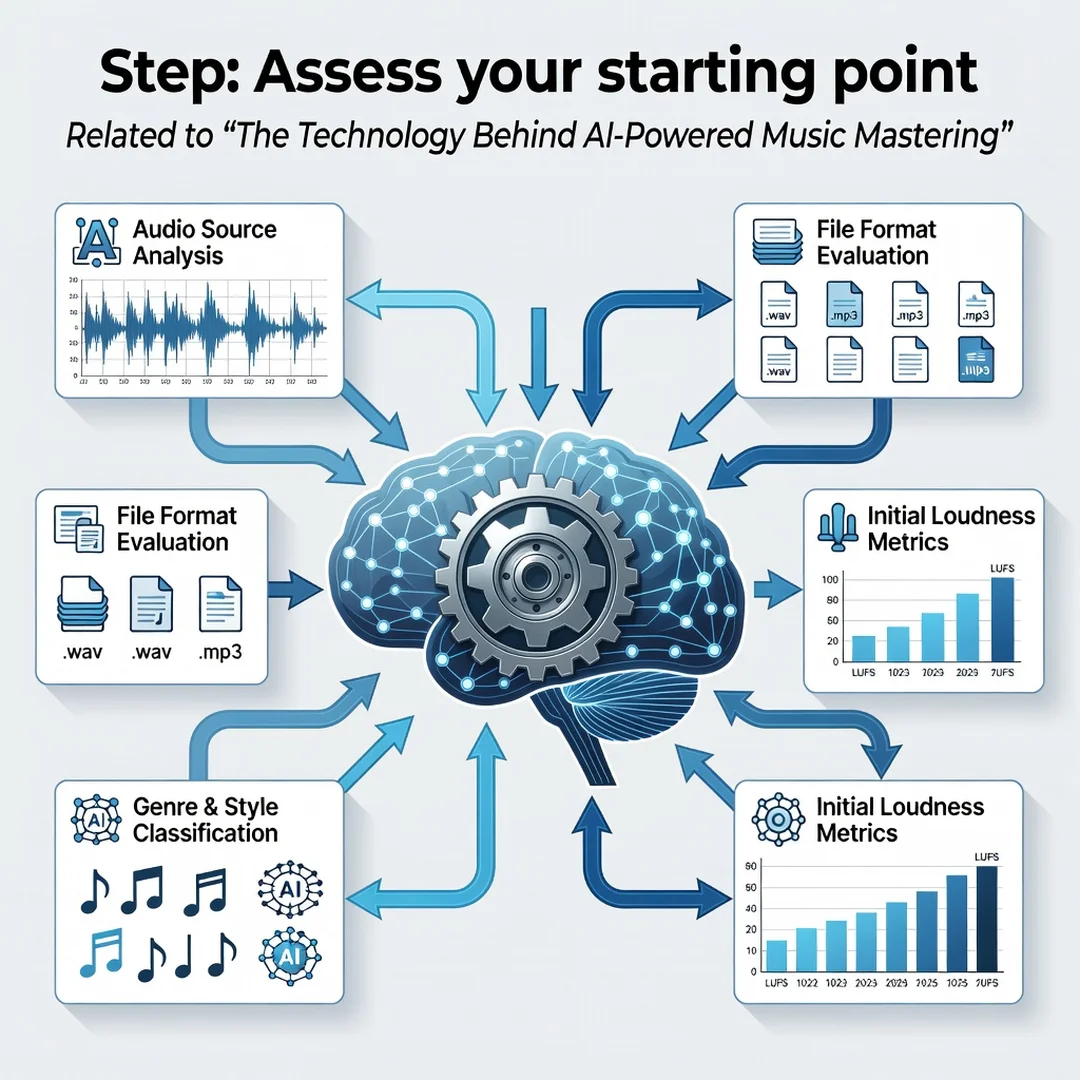
Step 2: Assess your starting point
Listen critically to your unmastered mix. Note its strengths and weaknesses: is it dull, boomy, narrow, or dynamically flat? Write these observations down. This gives you a reference point against which to evaluate the AI output and helps you decide whether mastering is the right fix or whether the mix needs revision.
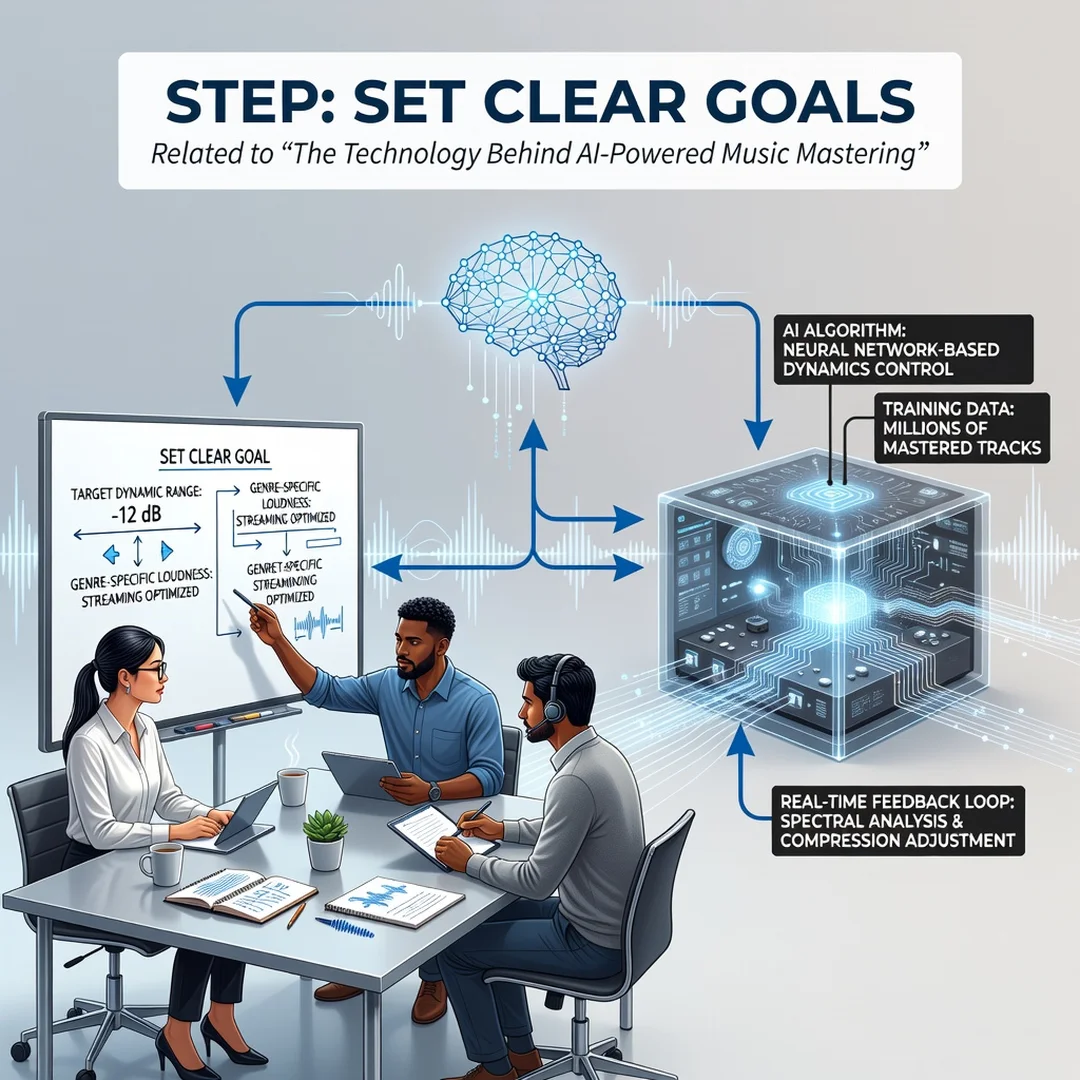
Step 3: Set clear goals
Decide on a target loudness, a genre reference, and the emotional character you want to preserve. If your track is a quiet acoustic ballad, a -9 LUFS target will destroy it. If it is a club track, a louder target may be appropriate. Clear goals prevent endless tweaking.
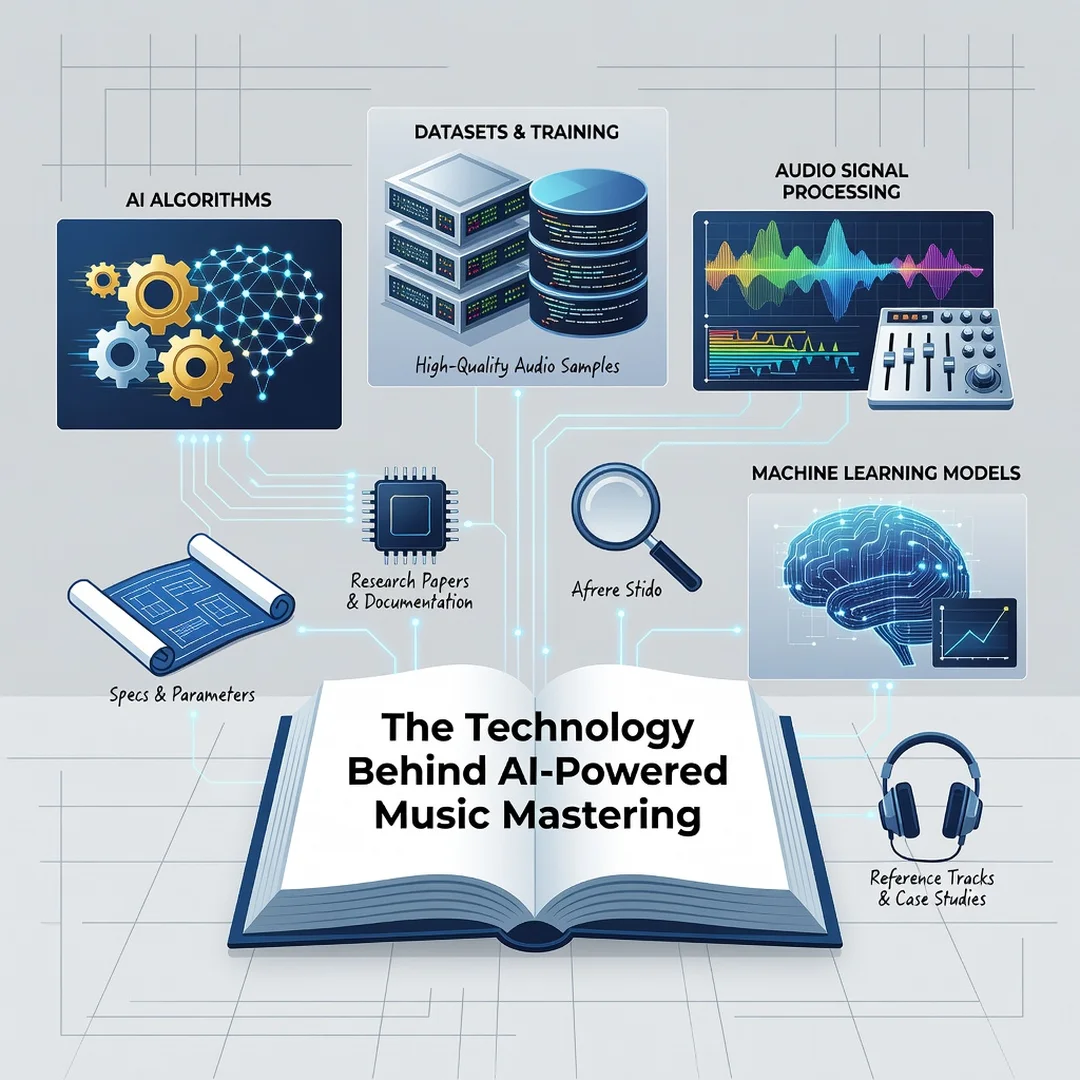
Step 4: Gather necessary resources
Collect a high-resolution export of your mix, one or two reference tracks you admire, and access to a reliable AI mastering service. If possible, have a second playback system available for checking. Reliable information and consistent habits lead to better long-term outcomes, so establish a repeatable workflow rather than improvising each time.
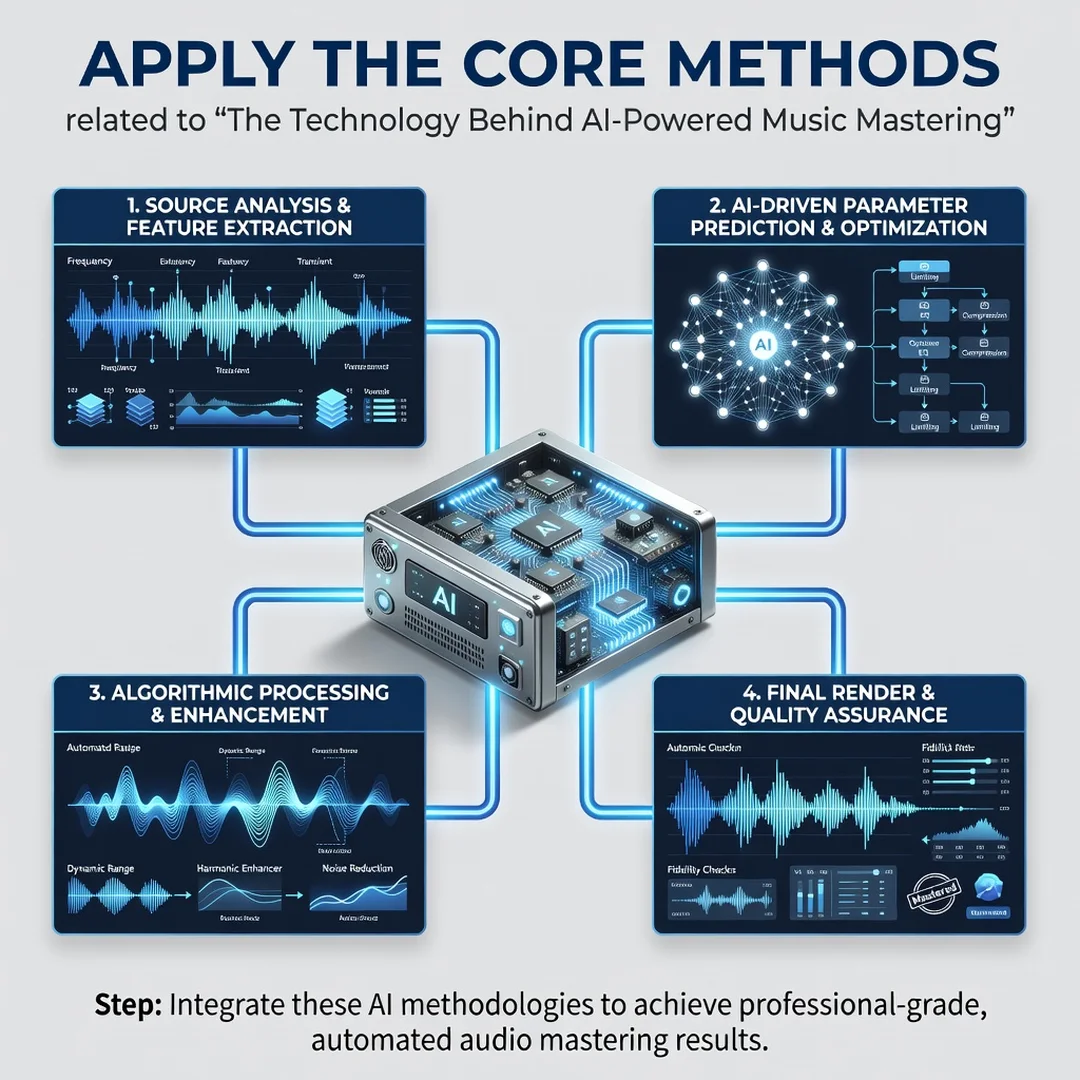
Step 5: Apply the core methods
Upload your track, select the appropriate genre or reference profile, and set your loudness target. Run the master. If the tool offers intensity or character controls, start subtle and increase gradually. Compare the result with your original at matched volume and note specific differences in tone, dynamics, and width.
Step 6: Monitor your progress
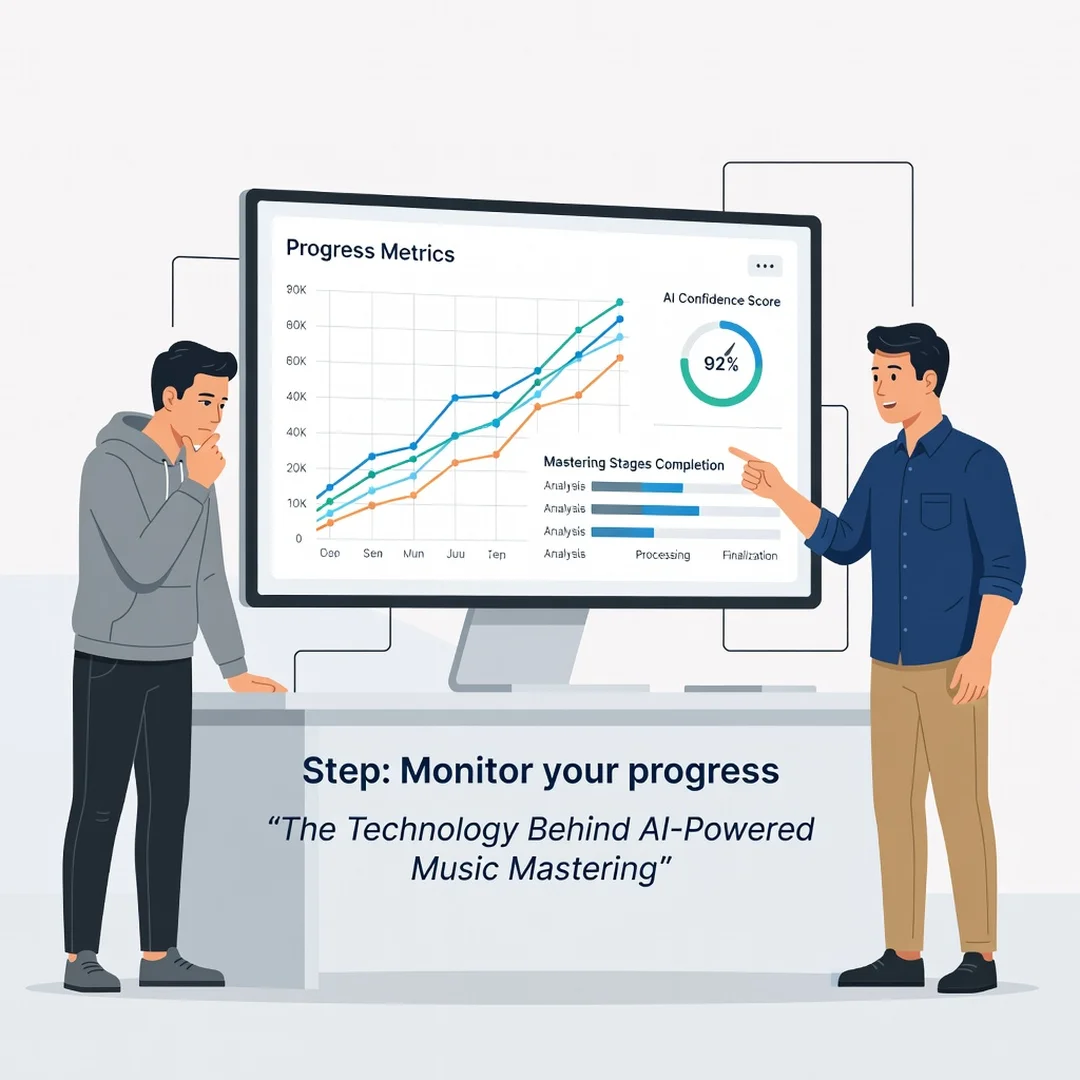
Evaluate the master over several days and on multiple systems. Keep notes on what worked and what did not. Over time, this record helps you refine your settings and recognize which tracks benefit from AI mastering and which need a human engineer. Consistency in evaluation is what separates improving results from random ones.
FAQ
What should I know about The Technology Behind AI-Powered Music Mastering?
You should know that it is a data-driven pipeline, not magic. It analyzes your track, applies corrective and tonal processing, and targets a loudness level. The quality of the result depends heavily on the quality of your mix and on the settings you choose. AI mastering is fast, affordable, and consistent, but it can over-compress or sound generic if used carelessly. It works best as a tool guided by informed human judgment.
Who is this guide for?
This guide is for independent musicians, producers, podcasters, and content creators who want to understand how AI mastering works before committing to it. It is also useful for anyone comparing AI services or deciding whether to hire a human mastering engineer. No advanced audio engineering background is required, though basic familiarity with mixing concepts helps.
Conclusion
AI-powered music mastering has matured into a genuinely useful technology. It combines spectral analysis, machine learning, and established DSP techniques to deliver consistent, release-ready results quickly. The key is to treat it as one tool in your workflow rather than a replacement for critical listening. Prepare clean mixes, set realistic loudness goals, compare results at matched volumes, and keep records of what works. Reliable information and consistent habits lead to better long-term outcomes, and that principle applies to mastering as much as to any other part of music production.
Frequently Asked Questions
What should I know about The Technology Behind AI-Powered Music Mastering?
This guide covers the essentials of The Technology Behind AI-Powered Music Mastering with practical steps you can apply right away.
Who is this guide for?
Anyone looking for a clear, structured overview without unnecessary complexity.
You now have a solid foundation for The Technology Behind AI-Powered Music Mastering. Apply the best practices above and revisit this guide as your needs evolve.